
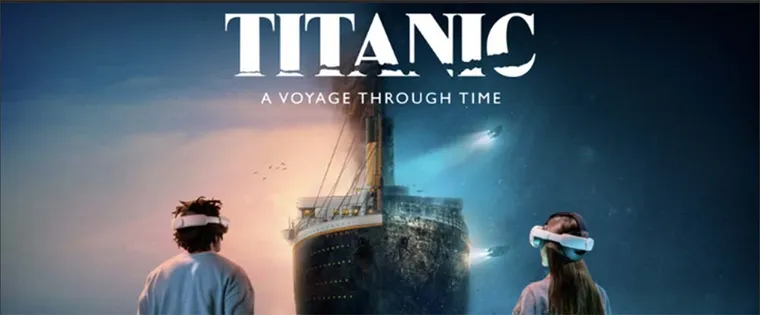
Titanic: A Voyage Through Time will open at The Galleries in Bristol on 11 June, introducing a virtual reality experience built around one of the most widely recognised maritime stories in modern history. The production uses interactive VR, cinematic storytelling and detailed digital reconstruction to place audiences within key moments from the Titanic’s past.
The experience has been developed with input from Musealia experts, with historical accuracy forming a central part of the production approach. This collaboration gives the project a stronger interpretive foundation, particularly for venues, cultural producers and experience operators considering how immersive technology can support serious historical subject matter.
The Bristol opening also adds to Fever’s growing portfolio of immersive experiences worldwide, reflecting continued market demand for location-based cultural formats that combine education, entertainment and emotional engagement.
From Ocean Floor To 1912
The visitor journey begins almost 3.8 kilometres below the ocean’s surface, where participants encounter the wreck as it lies today. The experience then moves back to 1912, presenting the ship during its maiden voyage through a series of digitally reconstructed spaces.
Key locations include the Grand Staircase, dining rooms, private cabins, the engine room and open deck. These spaces have been designed to offer more than visual scale. They provide a spatial framework for storytelling, allowing participants to understand the ship through movement, atmosphere and interaction.
For experience designers, this structure is significant. By starting with the wreck and then returning to the vessel in operation, the project uses contrast to frame the narrative. It connects archaeological reality with reconstructed memory, helping audiences consider both the ship’s physical remains and its wider human story.
Interactive Design And Guest Participation
A defining feature of Titanic: A Voyage Through Time is its use of hands-on participation within the VR journey. Participants receive a personalised boarding pass, post it into the ship’s mailbox and enter the vessel as first-class passengers.


The experience also places visitors inside a private cabin, where they unpack luggage, and in the engine room, where they take part in fuelling the ship by moving coal into the fire. These moments introduce active tasks within the story, shifting the format away from passive viewing and towards embodied participation.
For producers and attraction operators, this points to an important design principle in immersive heritage. Interaction can help visitors process historical environments more effectively when it is tied to narrative purpose, role play and setting. In this case, the activities are not presented as stand-alone features, but as part of a wider attempt to create a credible sense of presence on board the vessel.
Technology Supporting Historical Interpretation
The production also includes encounters with historical figures, including the ship’s architect and captain, placing individual perspectives within the wider account of the voyage. Combined with detailed digital environments and cinematic sequencing, this gives the experience a clear educational function while retaining the scale and immediacy expected from premium VR.
Fever has positioned the project as part of its broader aim to make culture and history more accessible through technology. For the attractions sector, the Bristol launch highlights the continued relevance of immersive formats for heritage interpretation, particularly when backed by subject expertise, strong narrative design and a recognisable story.
Titanic: A Voyage Through Time demonstrates how virtual reality can support site-independent historical storytelling, giving retail and city-centre venues the opportunity to host cultural experiences with broad audience appeal and strong educational value.


