
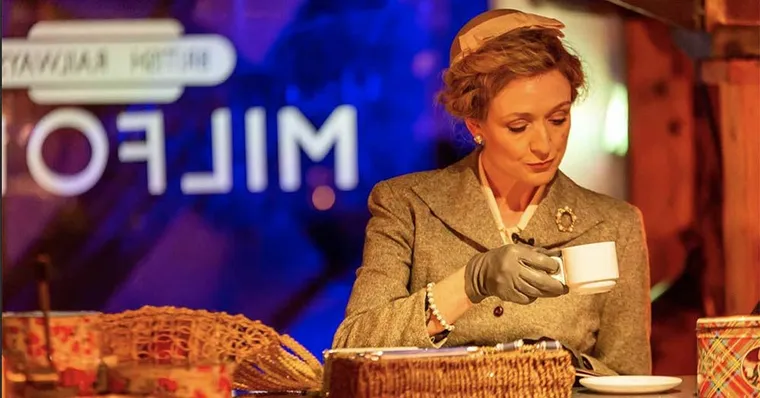
This September be the first time for the Theatre Royal Drury Lane’s Grand Saloon Bar hosting a dining production that offers an immersive experience, marking a new use of one of London’s most recognised theatre hospitality spaces.
The production will present Still Life by Noël Coward, the one-act play that later inspired the film Brief Encounter. It will be staged by Bob and Co. and Wild Pursuit Theatre, combining live performance with afternoon tea, champagne service and music performed by the cast.
For theatre operators, cultural venues and experience producers, the project reflects continued interest in using hospitality areas as performance-led assets. Rather than limiting programming to the main auditorium, venues are increasingly looking at bars, lounges and historic rooms as settings for intimate formats that can broaden revenue, deepen audience engagement and extend the cultural value of the building.
Immersive Dining In A Theatre Setting
The Grand Saloon Bar provides a distinctive setting for a work rooted in atmosphere, social ritual and restrained emotion. Still Life focuses on human connection within everyday surroundings, making it well-suited to a format in which service, music, and proximity are part of the performance structure.
The production will use table service as part of the wider staging approach, with afternoon tea and champagne integrated into the event. Live music played by the actors adds another layer to the format, supporting the tone of the piece while reducing separation between performer, space and guest.
From a B2B perspective, the model offers a useful example of how dining and theatre can be combined without treating hospitality as a secondary add-on. Here, food and drink service forms part of the production design, linking premium hospitality with programmed performance content.
This type of work can also support smaller capacity experiences within major venues. For operators with historic or architecturally significant spaces, immersive dining can provide a route to activate rooms that may otherwise be used mainly for pre-show service, private hire or corporate hospitality.
Production Team And Format


Theatre Royal Drury Lane’s September staging follows an earlier version of the production at the Waterwheel Bar at the Mill at Sonning Theatre in Berkshire. Its move into the Grand Saloon Bar gives the format a prominent West End setting and a larger trade context for venue-led experiential programming.
Directed by Tam Williams, the production will feature a five-actor cast comprising Emily Panes, Antony Jardine, Elizabeth Elvin, Rachel Pickup and Alasdair Craig. The compact cast size is notable for venue teams assessing operational models for immersive or dining-led theatre. Smaller ensembles can support close audience interaction while keeping production logistics manageable within non-traditional performance areas.
Still Life will run from 8 to 12 September, with two performances scheduled each day. A press preview is planned for 7 September. The limited run structure also points to a flexible programming approach, allowing a venue to test audience appetite and operational delivery before considering further activity of a similar kind.
Value For The Visitor Experience Sector
The project is relevant to the wider visitor experience sector because it demonstrates how heritage venues can use programming, hospitality and spatial character together. As operators seek to increase dwell time and diversify income, immersive dining can create premium experiences that sit alongside core venue activity.
For theatres, museums, galleries, attractions and cultural destinations, the key lesson is the value of matching content to place. Theatre Royal Drury Lane’s Grand Saloon Bar brings its own architectural identity and heritage associations, while Still Life offers a narrative scale suited to close performance.
This production shows how established theatrical material can be reimagined for hospitality-led environments, creating a format that supports cultural programming, commercial use and audience engagement within a single venue strategy.


