
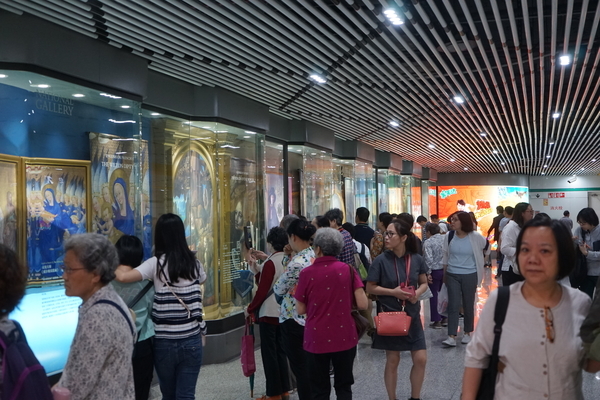
The National Gallery Museum staged a takeover of the Shanghai Metro Station for 30 days recently. The exhibit contained a 30 metre advertising panel for the Gallery called the “Culture and art corridor”. It’s the first step in a five year programme that seeks to build value and brand image for the London Museum in China.
The Shanghai Metro Station brings in around 200,000 commuters every day, so it’s entirely possible that a maximum of six million unique visitors saw the 30 metre long advertising panel. Adorned with works by Monet, Vincent Van Gogh and Leonard Da Vinci, it showcased the best that European art had to offer.
Cultural Impact
Buying and brand licensing director at the Gallery, Judith Mather, believes that this will help diversify global outreach and raise awareness of the National Gallery in other cities of the world. Yizan He, CEO of Alfilo Brands, the licensee of the Gallery in Greater China, agreed with Judith Mather.
The National Gallery currently gets around 300,000 visitors from China each year. With this campaign, they’re hoping to get 100 million brand impressions within the first year alone and around 200-300 million over the course of the five year programme.



The Value of Partnerships
The value of such exhibits and sharing of cultures is inherent in the practice itself. Not only does it introduce different cultures to each other, but it also brings them closer together. A similar exhibition, but much larger in scale, was held by the British Museum for its History of the World in 100 Objects tour of the world. The exhibition toured a plethora of countries ranging from Australia to the UAE and even China.
This year alone, the newly appointed director of the British Museum, Hartwig Fischer, flew to Iran amid strained relations between the two countries. The visit entailed collaboration between national museums and perhaps a thawing in the relations between the two countries as a result.
Most citizens of any country or city remain in their domestic settings for the majority of their lives. The advantage of museums is that they can learn about far off places and times gone by without having to break the bank. This opportunity is too good to pass up and with the reach that national museums have today, it’s an opportunity that is too good to pass up.
The world is becoming increasingly more mobile today than before. Millennials are traveling at a higher rate than previous generations. It would be bad from a business standpoint and a cultural standpoint to miss out on this intermingling of cultures and not inculcate more partnerships between museums.


