
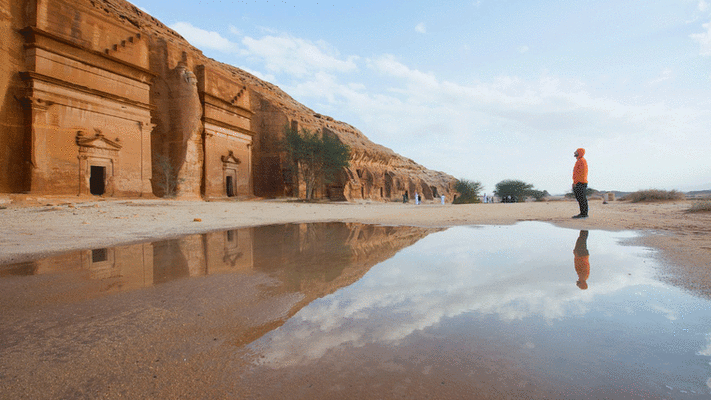
The royal commission for Al-Ula has revealed plans to develop the 22,000km square county into a sustainable and responsible destination for tourists, with over 2 million visitors by 2035. The framework for the development of the state contains 12 guiding principles to help ensure the protection and preservation of the globally significant region. Saudi Arabia’s first World Heritage Site opens to the public in October of this year.
The framework plan for the site was revealed at the UN World Urban Forum, where visitors experienced Al-Ula through a series of interactive displays that transported them to North-West Saudi Arabia, the home of Hegra, the country’s first UNESCO World Heritage Site. The site is home to more than 7,000 years of archaeological remains from successive civilisations.
The kingdom is renowned for its outstanding natural beauty, alongside its tremendous archaeological diversity. Recently Al-Ula played host to the first Hegra Conference of Nobel Laureates, which was the first site-responsive outdoor art installation featuring the work of both Saudi and international artists.
CEO of the Royal Commission for Al-Ula, Amr Al Madani said “We chose the World Urban Forum as a credible global platform to engage with the world’s leading developers and sustainability experts and share our plans for the long-term, responsible development of AlUla as world’s largest living museum. By combining heritage with nature, we are transforming the cultural landscape of AlUla and establishing the county as a global tourism destination with a thriving economy and local community.”
“We invite experts from around the world to join us on our journey which means we learn and innovate together. We see a clear road ahead as we attract investment and continue to protect, preserve, share and celebrate our heritage and nature with the world.”



“Not only have we opened our doors to travellers benefiting from Saudi Arabia’s new tourist visas, we’ve also delivered the infrastructure that is central to growth.”
“We have launched a new airport with potential to become a transport and logistics hub for North-West Saudi Arabia, as well as Maraya, our new 500-seat theatre and home for entertainment, business and celebratory gatherings which is also the largest mirrored structure in the world.”
One of Saudi Arabia’s goals for Al-Ula is to host 2 million visitors each year by 2035, and estimates suggest that in doing so 67,000 new jobs will be created, with almost half of those within the tourism sector. At the heart of the masterplan is the existing community in Al-Ula. Residents will undergo world-class hospitality training in order to create teams of tour guides, wildlife rangers and heritage guardians to enhance visitor experiences and preserve the heritage site. High school graduates from the region have also been awarded sponsorships to study at international universities, in France, Australia, the UK and US, in an effort to learn from other cultures with a view to adding to the masterplan.


