
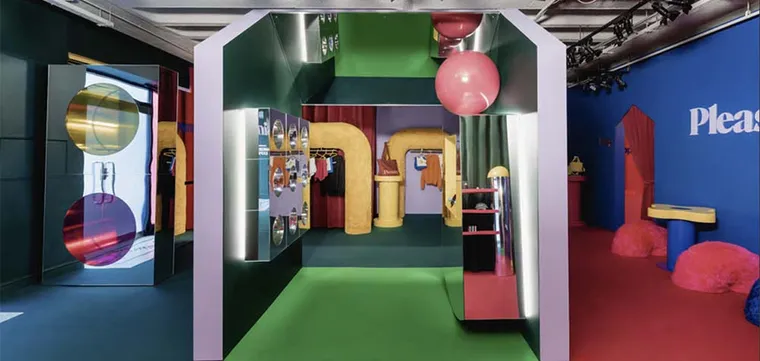
Pleasing, the fashion, lifestyle and beauty brand founded by Harry Styles, has opened its latest pop-up at 14 Carnaby Street in London. Running until 5 July, PleasingLand arrives during a period of high public attention around Styles’ London concert dates, giving the brand a timely opportunity to link cultural visibility with a temporary physical retail format.
For businesses working across brand experiences, retail design, live activations and visitor engagement, the project offers a useful case study in how celebrity-led brands are using pop-ups as structured environments for audience participation, product storytelling and data-rich engagement.
The Carnaby Street location also carries commercial significance. The area remains one of London’s most recognisable retail streets, with strong links to fashion, music and youth culture. By choosing a prominent site with established footfall and cultural association, Pleasing is positioning the pop-up as both a sales channel and a brand expression platform.
Sensory Design As A Retail Framework
PleasingLand has been developed as a tactile and multi-sensory retail environment, moving beyond a conventional temporary shop format. The experience places product discovery alongside interactive design, using smell, sound, touch and visual play to support brand storytelling.
The fragrance area uses a gaming-style concept to guide scent discovery, creating a light participatory mechanism around personal preference. This approach reflects a broader move in beauty and lifestyle retail, where guided discovery can help reduce decision fatigue and make product exploration feel less transactional.
Sound is used through the Pleasing x Loop Discovery Room, where visitors encounter a set of audio environments linked to the Loop brand. This partnership-led installation gives both brands an opportunity to demonstrate product values through experience rather than static display.
Touch is addressed through a photo booth that produces physical prints, adding a collectible element tied to the London location. For pop-up operators, this type of feature can support social sharing while also creating a tangible reminder of the visit.
Product Exclusivity And Partnership Value


The retail offer includes existing Pleasing products, new releases and London-specific items. Exclusive accessories, apparel and limited local pieces support scarcity-driven demand, a common tactic in short-run activations where product availability is linked directly to place and time.
The pop-up also features a commercial partnership with American Express. Cardholders are offered priority access, dedicated payment support, gift-with-purchase opportunities and limited-edition products. For brand owners and experience producers, this structure shows how financial services partners can add value to retail activations through access, service differentiation and product exclusivity.
Such partnerships are increasingly relevant in the temporary retail sector. They allow brands to share audience reach, add perceived value and build layered experiences that serve both commercial and marketing objectives.
Lessons For Brand Experience Operators
PleasingLand underlines the growing importance of physical retail as an experience-led marketing channel. Temporary spaces can support product launch activity, cultural relevance, media attention and direct audience engagement within a controlled environment.
For visitor experience professionals, the project is also a reminder that retail activations are increasingly borrowing methods from attractions, exhibitions and live events. Spatial storytelling, interactive installations, limited-run content and partner-led access models are now central to many high-profile brand environments.
As brands continue to compete for attention across digital and physical channels, pop-ups such as PleasingLand show how short-term retail can operate as a measured, commercially focused brand experience.


