
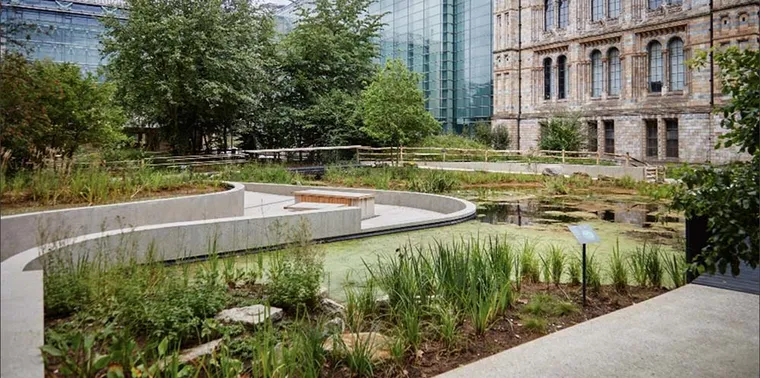
The Natural History Museum has launched Museums for Nature, a UK-wide programme designed to help museums use their outdoor spaces to support biodiversity, public access to nature and local participation in nature recovery.
Backed by The National Lottery Heritage Fund, the initiative builds on the Natural History Museum’s recent work on its own gardens in London. The programme will now support partner museums in assessing their grounds, identifying habitats and introducing practical measures that can improve ecological value across museum sites.
For cultural organisations, the project reflects a growing recognition that museums can play a wider civic role beyond collections, exhibitions and learning programmes. Museum grounds can become active environmental assets, particularly in urban areas where access to green space and local biodiversity can be limited.
First-Year Museum Partners
In its first year, Museums for Nature will work with eight museums from the Real World Science network, before wider national expansion is planned.
The first group includes the Natural History Museum at Tring, National Museums NI, Wollaton Hall in Nottingham, Touchstones in Rochdale, Museum Wales, Amgueddfa Cymru, Great North Museum: Hancock in Newcastle upon Tyne, The Herbert Art Gallery & Museum in Coventry and Birmingham Museums Trust.
The programme will support these partners in mapping existing habitats and planning interventions that suit their sites, audiences and local ecological conditions. Potential activity includes creating pollinator-friendly planting, developing ponds and introducing climate-resilient planting schemes.
For museum leaders and estate teams, this points to the increasing importance of outdoor space as part of institutional planning. Grounds management is no longer only a maintenance issue. It can support learning, wellbeing, sustainability targets, visitor engagement and local partnerships.
Community Science And Public Participation
Community science will be a central part of the programme. Museums will work with local participants to record nature, take practical action and build understanding of biodiversity close to home.


This aligns with the Natural History Museum’s Strategy to 2031, where community science is a priority research theme. Museums for Nature also forms part of the museum’s Urban Nature Movement, a wider set of programmes focused on encouraging people to act on behalf of the natural world.
For engagement teams, the project offers a model for combining environmental action with public programming. Activities such as gardening, habitat creation, STEM sessions, biodiversity surveys and intergenerational projects can bring together learning, wellbeing and place-based participation.
The Herbert Art Gallery & Museum has highlighted opportunities to work with early years families and older adults through nature-focused activities, including STEM play, community gardening and reminiscence projects. This demonstrates how green space development can be linked with inclusive programming across different audience groups.
Heritage Funding With Environmental Purpose
The National Lottery Heritage Fund’s support positions Museums for Nature within a broader view of heritage, where natural heritage, social value and cultural infrastructure are closely connected.
The programme also responds to the UK’s wider biodiversity challenges by using museum sites as practical testbeds for nature recovery. For the museum and visitor experience sectors, it shows how public-facing institutions can use their estates to deliver measurable environmental, educational and social value.
Museums for Nature gives participating organisations a framework for turning underused outdoor areas into nature-rich spaces. It also provides a scalable model for museums seeking to align sustainability, learning and local engagement within long-term institutional strategy.


