
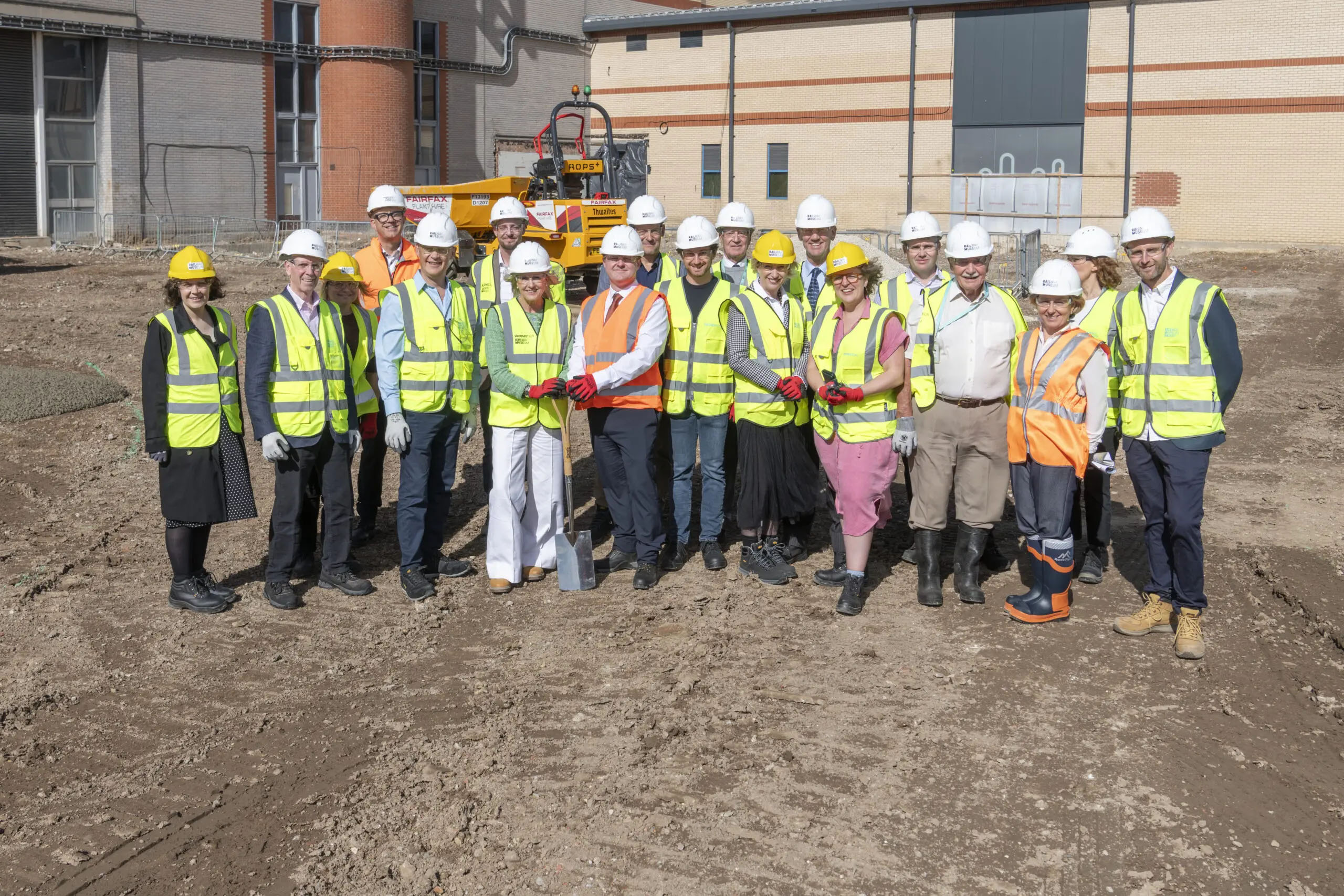
GRAHAM has broken ground on Central Hall and Railway Futures: The Porterbrook Gallery at the National Railway Museum, marking a major delivery milestone for the York institution’s long-term redevelopment plans.
The start of construction was marked with an event for funders, partners and supporters, organised by GRAHAM in partnership with the museum. Guests were given access to the construction site, where early activity includes excavation work and foundation preparation for the new Central Hall building.
For museum operators, heritage developers and cultural infrastructure teams, the project is a significant example of how capital investment can support visitor circulation, interpretation, education and future-facing sector engagement within a nationally important museum setting.
Central Hall To Create A New Museum Gateway
Central Hall is planned as a new entrance and orientation space for the National Railway Museum. Designed by Feilden Fowles Architects, the building will create a clearer arrival point and improved connections across the museum estate.
The architectural concept references railway roundhouses through a circular form, high glazed ceilings and timber radial elements. Its external finish will use recycled copper, aligning the building’s material choices with the project’s sustainability aims.
GRAHAM’s project team has framed the construction start as an important point in its ongoing work with the museum. The contractor’s role will focus on delivering a durable, high-quality building intended to support visitor operations for many years.
For Experience UK’s audience, Central Hall highlights several current priorities in cultural venue development. These include intuitive visitor arrival, stronger spatial legibility, sustainable specification and architectural storytelling linked to an institution’s subject matter.
Railway Futures Adds A Forward-Looking Gallery
Alongside Central Hall, the project includes Railway Futures: The Porterbrook Gallery, a new interpretive space that will examine the history of rail while also exploring what future rail systems, technology and careers could involve.
The gallery is backed by Porterbrook, with the company’s leadership positioning the project as a way to inspire young people and broaden awareness of career pathways in rail. The gallery will connect historic collections with future skills, innovation and industry development.




For museums and visitor attractions, this creates a useful model for sponsor-supported interpretation. Rather than presenting industry partnership as a separate commercial layer, Railway Futures places sector relevance at the centre of the visitor experience. It links heritage, education and workforce development within one gallery brief.
Supporters Mark The Start Of Delivery
During the event, guests heard from National Railway Museum Director Craig Bentley and Porterbrook CEO Mary Grant on the significance of the scheme and the role of supporters in moving the project into construction.
Attendees then visited the construction site wearing hard hats and PPE, gaining an early view of the building works. To record the project’s starting point, guests also signed copies of the gallery design plans. These will be placed in a time capsule as a record of the scheme’s early stage.
This type of stakeholder engagement is important in cultural capital projects, particularly those dependent on a mix of public support, philanthropy, industry partners and community advocacy. It gives funders and supporters a visible connection to delivery, while reinforcing the wider purpose of the investment.
Relevance For Cultural Infrastructure Teams
The National Railway Museum project points to the growing importance of museum buildings that serve several functions at once. Central Hall is not simply an entrance building. It is intended to support orientation, identity, visitor comfort and operational efficiency.
Railway Futures adds another layer, using interpretation to connect collections with the skills and technologies that may shape the rail sector in the years ahead.
For designers, contractors, consultants and cultural operators, the scheme offers a clear case study in aligning architecture, sustainability, learning and industry partnership. As work now moves forward on site, Central Hall and Railway Futures will be closely watched by organisations involved in museum renewal, transport heritage and visitor experience development.


