
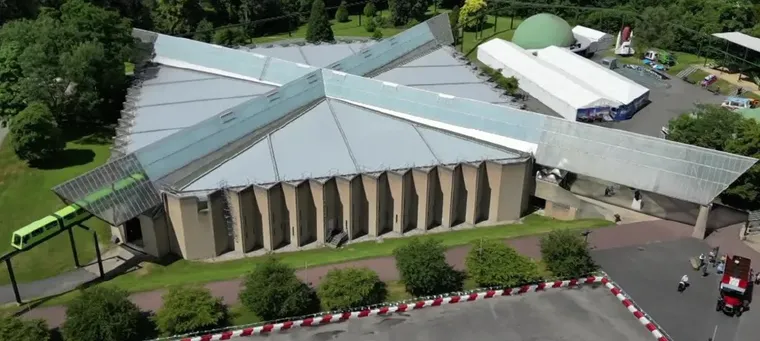
The National Motor Museum Trust has announced that the National Motor Museum is set to leave Beaulieu after over half a century, opening a new chapter for one of the UK’s leading transport heritage collections.
The museum opened in 1972 in purpose-built premises on the Montagu family’s New Forest estate. It grew from an earlier display of five cars at Palace House in 1952 into an internationally recognised collection of vehicles, motorcycles, archive material and motoring objects.
The independent charity now holds over 250 vehicles, while the wider collection includes around 1.9 million items linked to British motoring history. Its holdings include early motorised carriages, land speed record vehicles and well-known cars from film and television.
The trust has said it is approaching the end of its lease and has begun the process of identifying a new long-term home. Discussions with the Montagu family over the past two years have led both sides to conclude that relocation gives the charity the strongest basis for its future plans.
Collection Growth And Long-Term Strategy
For the heritage and attractions sector, the announcement highlights a familiar challenge: how major collections can meet modern operational, educational and commercial needs within inherited sites.
The trust has framed the relocation as a rare opportunity to rethink the museum’s role, reach and public purpose. Its future plans include wider community engagement and the development of a heritage engineering apprenticeship training centre. This points to a broader institutional model, where collection care, skills development and public programming sit together.
For museum planners and cultural investors, the move raises important questions around site selection, capital funding, storage, conservation, interpretation, transport logistics and audience access. Moving a collection of this scale will require detailed planning, particularly given the specialist care needs of historic vehicles and related archive material.
The announcement also comes shortly after a £600,000 redevelopment of the museum’s entrance hall and upper gallery was completed at Beaulieu. That project was described by the estate as one of the most significant updates to the museum since its construction, showing that recent investment has already been made in the current visitor offer.
Beaulieu Retains A Motoring Offer


Beaulieu has confirmed that it will continue to operate a motor museum after the trust’s lease ends, with a significant number of vehicles remaining on the estate. Some vehicles are owned by, or on loan from, the Montagu family and will stay at Beaulieu as part of its future attraction offer.
The estate’s wider visitor proposition, including Palace House, the former monastery remains and its motoring events programme, will also continue. Events such as the International Autojumble are not expected to be affected by the trust’s relocation plans.
This creates an unusual sector scenario in which the charitable institution and the host attraction will both move forward with separate motoring heritage offers. For operators, this will require clear positioning, careful communication and distinct visitor propositions to avoid confusion among audiences, partners and collection stakeholders.
The current lease has around four years remaining, giving both organisations time to plan staffing, operations and future visitor experience strategies. The trust has indicated that staffing structures will be reviewed, while museum building and workshop staff employed by Beaulieu are not expected to be at risk from the trust’s internal restructuring.
Implications For Heritage Attractions
Beaulieu remains a major south coast attraction, recording 310,384 visits in 2025 according to Association of Leading Visitor Attractions figures. The departure of the National Motor Museum Trust will therefore be closely watched across the heritage, tourism and cultural investment sectors.
For Experience UK’s network, the planned relocation offers a valuable case study in collection mobility, brand separation, host-site strategy and the future of specialist museums. It also reflects the growing importance of skills training within heritage attractions, especially where technical conservation knowledge is vital to long-term collection care.
The next stage will be critical. A new site could give the National Motor Museum greater capacity for education, engineering training, public engagement and collection interpretation. At the same time, Beaulieu has an opportunity to reshape its own motoring offer within a wider estate-based attraction model.


