
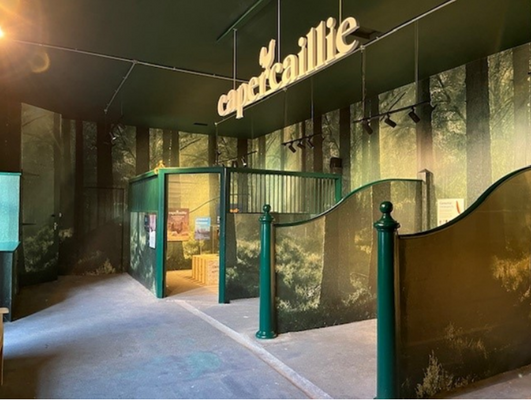
The recent revitalisation of Balmoral Castle’s visitor experience is a shining example of innovation in heritage site presentation. This project, which employed immersive design techniques, demonstrates the remarkable potential of transforming historical sites into dynamic, engaging environments while preserving their intrinsic cultural value.
Balmoral Castle, a name steeped in history and tradition, undertook this transformative journey by working with MediaCo to integrate full-wall vinyl wraps and interpretive signage panels throughout the centre. This approach served as an aesthetic upgrade and a strategic initiative to create a more interactive and informative visitor experience.

At the heart of this project were the intricate and visually captivating vinyl wraps adorning the Castle’s walls and stables. Designed with meticulous attention to detail, these wraps perfectly balance historical accuracy and contemporary appeal. Their durability is enhanced by a wipe-clean laminate, making them long-lasting and an effective storytelling medium. The Di-bond printed panels with split battens further enriched the visual narrative, turning every corner of the Castle into an opportunity for learning and discovery.

A particularly striking feature of this project was the external signage at the entrance. This crucial element played a key role in setting the stage for visitors, subtly preparing them for a journey through time. Coupled with the interior enhancements, the signage helped create a cohesive and immersive experience from the first step onto the Castle grounds.


The success of this project was largely due to the collaborative efforts of designers, historians, and implementation specialists. Their combined expertise ensured that every aspect, from material selection to thematic design, resonated with the Castle’s historical essence while meeting modern visitor expectations.

The Balmoral Castle revitalisation is a testament to the power of collaborative design in enriching the experiences of visitors at historic sites. It showcases how such spaces can evolve, embracing modern design techniques while honouring and accentuating their historical significance. This harmonious blend of old and new serves as an inspiring blueprint for similar projects globally, providing valuable insights into the future of heritage site preservation and visitor engagement.


