
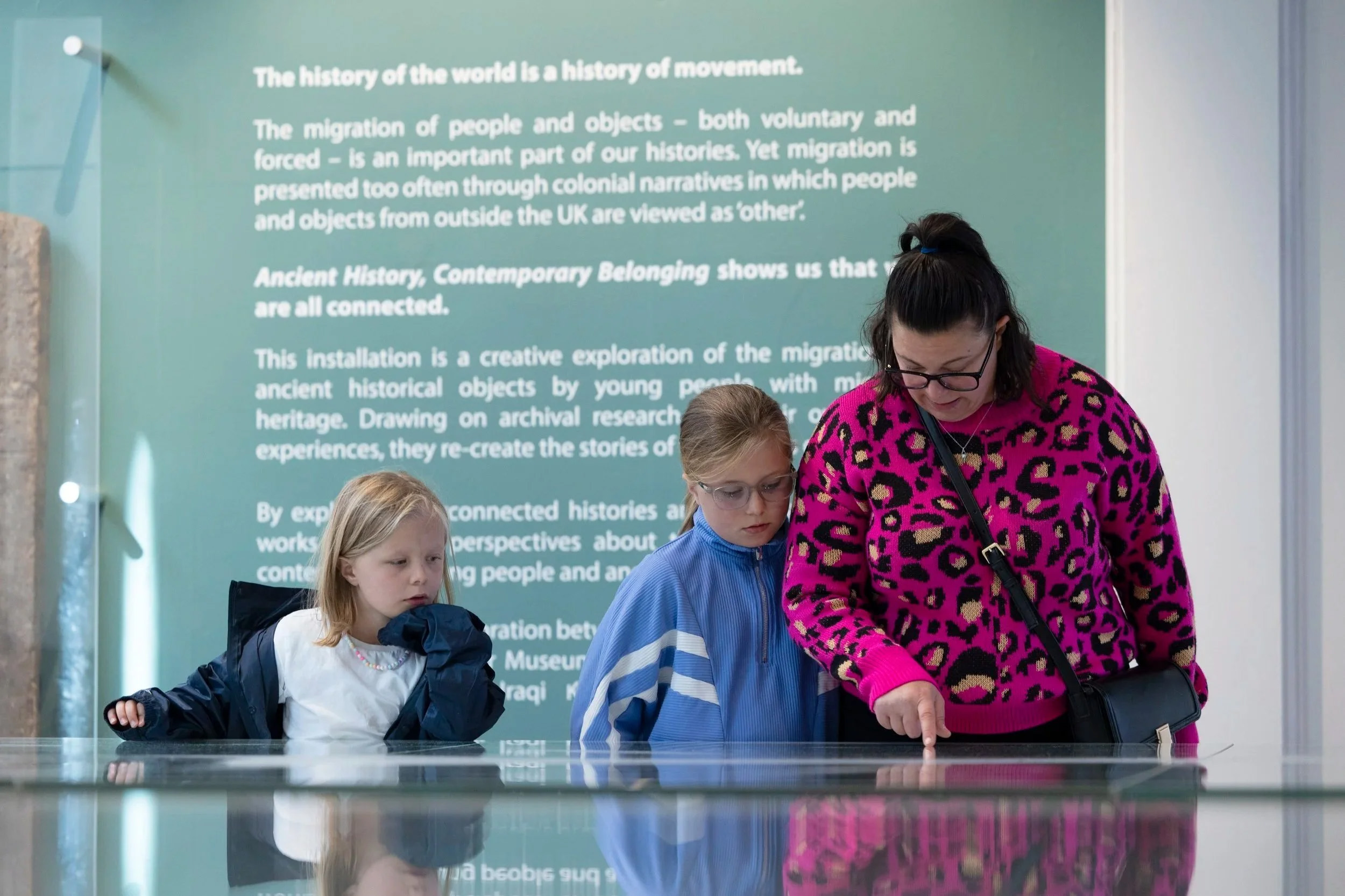
Manchester Museum, part of the University of Manchester, has secured support from Getty’s New Interpretations initiative for a three-year programme to rethink how its archaeology collections are presented. The project will place community participation at the centre of gallery interpretation, with implications for museums developing collaborative approaches to collections, exhibition design and civic engagement.
The museum is the only European recipient among 11 organisations selected for the initiative’s pilot grant round. Its proposal focuses on using archaeological material to prompt discussion about contemporary issues and possible futures, rather than treating interpretation solely as a means of communicating historical information.
Imagination Fellowships To Inform Gallery Development
Three Imagination Fellowships will bring community representatives, creative practitioners, researchers and museum staff together to develop new interpretive interventions for the Archaeology gallery. The fellowships will provide a framework for sharing expertise and testing approaches to display development across professional and community groups.
For exhibition designers and interpretation specialists, the programme raises practical questions about authorship, decision-making and the role of contributors beyond conventional consultation. Co-design requires institutions to consider how different perspectives influence the selection, framing and presentation of objects, as well as the language and methods used to communicate their significance.
The museum’s stated priorities of inclusion, imagination and care will guide this work. Director Esme Ward has identified the project as an opportunity to connect the university’s research expertise with community knowledge, while developing collaborative display methods that support belonging and public participation.
Internationally Significant Collections As A Starting Point
Manchester Museum holds approximately 60,000 archaeological objects representing over 50,000 years of human history. Arts Council England has recognised the collections through Designated status, reflecting their international importance.
The holdings include extensive Roman-era excavated material from Manchester and surrounding areas, prehistoric objects from Europe, West Asia, South Asia and Africa, and rare Classical Greek ceramics that offer alternative readings of established mythological accounts.



This breadth creates opportunities to examine how collection narratives are constructed and whose knowledge is represented. For curatorial and exhibition teams, the challenge will be to connect specialist research with multiple interpretations without losing historical context or the distinct characteristics of individual objects.
The resulting interventions could also offer useful evidence on how collaborative interpretation can be integrated into permanent galleries, where changes must account for conservation, accessibility, maintenance and long-term relevance.
Potential Lessons For The Wider Museum Sector
Getty’s pilot programme includes institutions working across different collections and cultural contexts. Fellow recipients include Walker Art Center, Queens Museum, First Americans Museum, Denver Art Museum, Baltimore Museum of Art and the Australian Centre for the Moving Image. Leeum Museum of Art is participating in partnership with M+.
Manchester Museum intends its work to contribute to interpretation practice beyond its own galleries, nationally and internationally. The three-year timeframe offers scope to develop, review and refine methods for bringing community perspectives into display planning.
For museum operators, cultural consultants and exhibition delivery teams, the initiative is a relevant example of how funding can support sustained collaboration rather than a single exhibition output. Its wider significance will depend on the methods developed, the decisions shared with contributors and the lessons that can be applied by other institutions.
Documenting the process, including how contributors’ ideas affect final gallery displays, could make its findings particularly useful to organisations planning similar programmes.


