
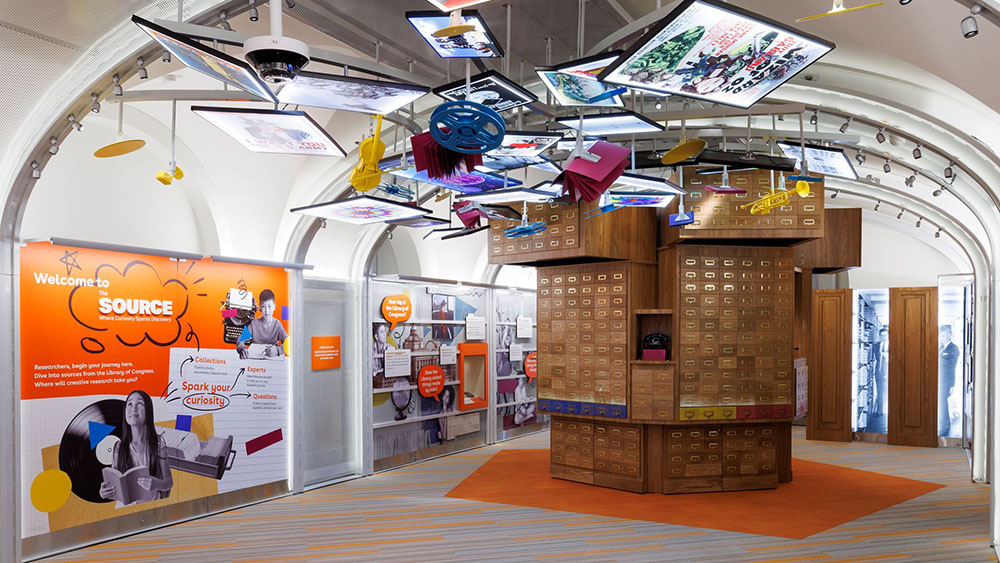
The Library of Congress has opened The Source, a 370 sq m experiential research gallery designed to introduce young audiences to primary source research through interactive AV, tactile objects and digital interpretation.
Created as part of the A Library for You initiative, the gallery supports visitors aged eight to 15 as they explore archive material across film, text, sound and image. For museum, library, education and cultural attraction teams, the project offers a strong example of how digital systems can make specialist collections accessible without reducing their intellectual value.
Rather than presenting archive material as static content, The Source structures the visit as an active research process. Projection, RFID, responsive screens and physical replicas are used to guide users through observation, comparison, questioning and creative response. The result is a learning-led environment with clear relevance for organisations developing family, school and youth engagement programmes.
Design Teams Link Physical And Digital Interpretation
Skolnick Architecture led the interpretive planning and exhibition design, while Potion, now Hyperquake, developed the digital interactive installations. Media development was first led by Potion founder Philip R. Tiongson and producer Claire Bradley, whose team now forms the core of Hyperquake’s experiences group.
Working with Skolnick’s planners and Library of Congress content specialists, the team developed a connected sequence of physical and digital encounters. The approach places AV technology in service of research skills, rather than treating media as a separate attraction.
The gallery begins in the Welcome Room, where a five-sided Card Catalog functions as a projection-mapped focal point. When drawers are opened, animated content appears across the structure, introducing collection items and prompting further investigation. A nearby Librarian Desk features on-screen staff members who explain how researchers work with primary sources and guide visitors towards four themed Collections Zones.
RFID Objects Create Hands-On Discovery
In the Collections Room, digital installations support deeper interaction with archive material. More than 200 RFID-enabled objects can be scanned at Investigation Stations, where visitors can examine manuscripts, magnify historic images, review audio recordings and move through film clips frame by frame.




For operators and designers, the use of RFID is notable because it links physical handling with personalised digital content. This helps retain the value of object-based learning while adding interpretive layers that can be updated, expanded or adapted for different collections.
Replica Tools, including a film projector, record player and microfilm reader, introduce traditional media formats through short, intuitive interactions. These elements give young visitors a practical understanding of how information has been recorded, stored and accessed across different periods.
The Researcher Desk extends this method by presenting archival boxes and screen-based narratives that show how real researchers have used Library materials to explore specific questions. By including examples from younger researchers, the gallery positions research as an attainable process rather than a purely academic activity.
A Model For Research-Led Cultural Engagement
The visit concludes at the Source Book, a large-scale interactive installation where visitors create digital collages and record their own research intentions. These contributions appear on a projection wall, building a changing display of collective inquiry.
Hyperquake’s creative leadership has described The Source as a centre for active research rather than a conventional exhibition. Its design uses tactile artefacts and digital content together, giving young visitors the tools to see themselves as capable researchers.
For the visitor experience sector, The Source demonstrates how AV-led interpretation can support access, learning and institutional mission. It also shows how libraries and cultural organisations can present complex collections through formats that are structured, participatory and scalable.


