
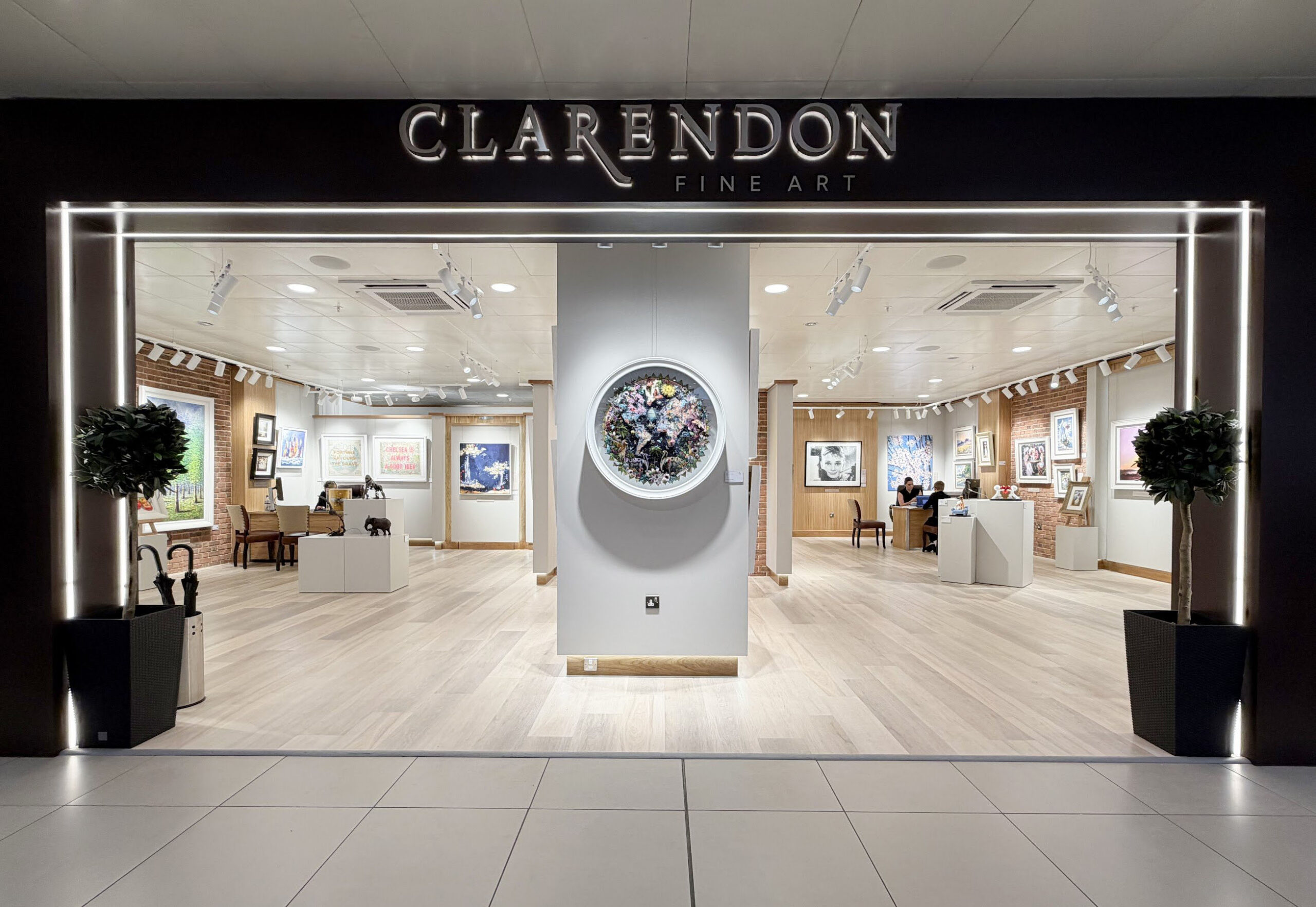
John Lewis has partnered with Clarendon Fine Art to introduce gallery spaces within three of its department stores, adding a new experience-led retail offer to its UK estate.
The partnership brings Clarendon Fine Art galleries to John Lewis Oxford Street, Cheadle and Southampton. The Oxford Street space opened on 3 September, followed by Southampton on 18 September, with Cheadle scheduled to open on 2 October.
For retail, cultural and visitor experience businesses, the move reflects the continued convergence of shopping, advisory services and cultural discovery. Rather than positioning art buying solely within standalone galleries, the partnership places curated works inside an established retail environment, where specialist guidance can sit alongside wider lifestyle and home-focused services.
Curated Collections Within Department Store Settings
Each gallery will offer a curated selection of work across contemporary artists, emerging names and modern masters. Artists represented in the offer include Mr Brainwash, The Connor Brothers, L.S. Lowry, Pablo Picasso and Keith Haring.
The galleries are being placed in different positions within each store, reflecting the layout and customer profile of each location. Oxford Street’s gallery is on the second floor, while Cheadle will host its gallery on the ground floor and Southampton on the first floor.
Clarendon Fine Art specialists will be based at each site to advise customers on buying and collecting. This gives the partnership a service-led structure, supporting both first-time buyers and established collectors through guided discovery rather than simple product display.
For department store operators, this model shows how specialist concessions can contribute to a broader store proposition. Art offers visual interest, advisory value and a reason for customers to spend more time in store, while also aligning with interiors, gifting and lifestyle categories.
Experience-Led Retail Supports Store Relevance
John Lewis has positioned the partnership as part of its wider focus on giving customers additional reasons to visit physical stores. The retailer is looking to combine shopping with moments of discovery, advice and inspiration, supported by its Partner-led in-store services.
This direction is significant for the wider retail and visitor experience sectors. As online shopping continues to shape transactional behaviour, physical retail spaces are increasingly being assessed on their ability to provide services, expertise and memorable in-person activity.




In-store art galleries can help meet that requirement. They create a slower-paced area within the retail environment, encourage conversation with specialists and introduce cultural content into a commercial setting. For landlords and retailers, such partnerships can also support differentiation at a time when store portfolios need clear reasons to remain relevant.
Clarendon Fine Art Extends Its Expansion Strategy
For Clarendon Fine Art, the John Lewis partnership forms part of a wider expansion into premium retail, high street and travel locations. The collaboration gives the gallery business access to established footfall and trusted retail settings, while introducing its advisory model to audiences who may not typically enter a traditional gallery.
Rebecca Ball, Clarendon Fine Art’s chief commercial officer, has described the partnership as an important stage in the company’s growth. The move suggests that gallery operators are increasingly exploring flexible, embedded and location-led formats to reach new collector groups.
For B2B stakeholders, this has wider implications. Cultural retail, collectable art and advisory-led commerce are becoming part of broader mixed-use and destination strategies. Galleries located within retail environments can benefit from shared infrastructure, existing customer loyalty and complementary categories such as interiors, design and hospitality.
Lessons For Retail And Cultural Partnerships
The John Lewis and Clarendon Fine Art partnership offers a practical example of how retailers can introduce cultural value into physical stores without building a full exhibition operation themselves. By working with a specialist partner, John Lewis can add expertise, inventory and advisory service while retaining focus on the overall customer experience.
For visitor experience professionals, the rollout underlines the importance of programming, service quality and spatial fit in retail partnerships. A successful gallery concession must feel integrated into the host location while maintaining its own identity and curatorial credibility.
As retailers seek new ways to increase dwell time and cultural operators explore alternative routes to market, in-store gallery partnerships could become a more prominent feature of experience-led retail strategy.


