
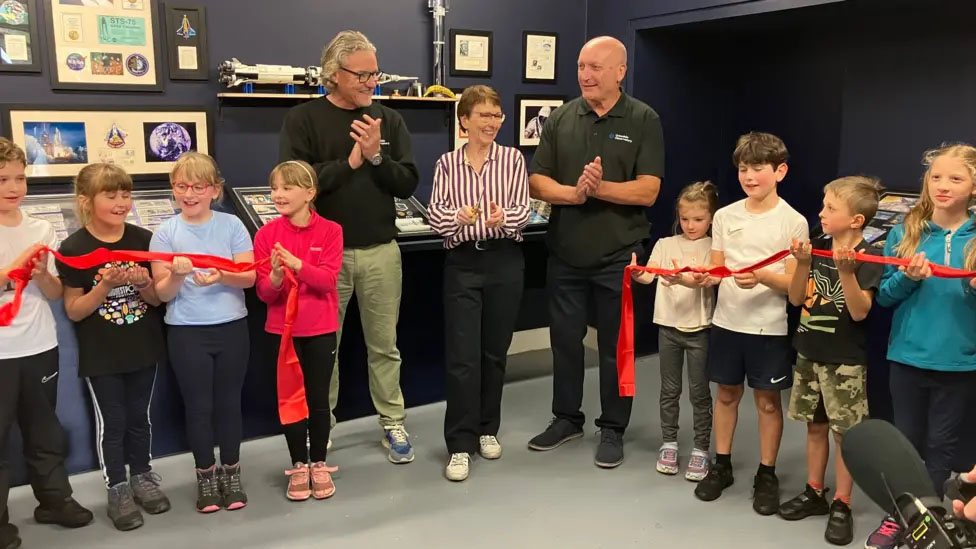
Grizedale Observatory and Planetarium in Cumbria has opened the John Dulcamara Space Flight Museum, adding a significant new collection of space history artefacts to its public science and astronomy offer.
The museum was officially opened by Helen Sharman, Britain’s first astronaut, who visited the Lake District site to mark the launch. Sharman became the first British person to travel to space in 1991, when she flew to the Mir Space Station and carried out scientific experiments and Earth observation work.
The new museum is based on a private collection donated by John Dulcamara, who spent around 30 years gathering material connected with space flight. The collection includes autographed photographs, signatures from notable figures in space exploration and components linked to spacecraft, including a piece from the Apollo 11 command module.
For observatories, science centres and visitor attractions, the launch is notable because it adds object-based interpretation to an already active astronomy venue. It gives Grizedale a broader platform across public engagement, STEM learning, school activity and event programming.
Private Collection Becomes Public Resource
Dulcamara’s collection began after he attended a shuttle launch in 1996 and kept the ticket from the event. That first item developed into a much larger archive, now containing thousands of pieces connected with space flight history.
By placing the collection at Grizedale Observatory, the material moves from private ownership into a public-facing setting where it can support education, interpretation and visitor programming. This type of donation can be highly valuable for smaller cultural and science venues, particularly when objects bring clear stories, authenticity and links to major global events.
The Apollo 11 material gives the museum a strong anchor point, connecting the collection with one of the most widely recognised milestones in human space exploration. Other items linked with Russian space activity add further international context, helping the museum present space history beyond a single national narrative.
Education And Inspiration At The Core
Sharman’s visit included time with local schoolchildren, giving the launch a strong education focus. Her presence connected the artefacts on display with direct lived experience of space flight, making the opening a rare opportunity for young people in Cumbria to engage with a British astronaut.
Observatory director Gary Fildes has underlined the importance of those educational moments, noting that encounters with people connected to science and exploration can have a lasting effect on young audiences.




For the wider visitor experience sector, this highlights the value of combining collections with live interpretation and personal testimony. Artefacts can create fascination, but direct engagement with experts, scientists or industry figures can give institutions stronger learning outcomes and deeper community relevance.
Building A Wider Science Destination
Grizedale Observatory opened in May 2024 near Ambleside, offering public access to telescopes, a planetarium and a meteorite laboratory. It also hosts events including a dark skies festival, positioning itself within both science tourism and regional cultural activity.
The addition of the John Dulcamara Space Flight Museum strengthens that offer by extending the venue beyond observation-based experiences. Visitors can now engage with physical objects from space flight history, alongside astronomy, meteorites and planetarium content.
For attraction operators, this mixed model is commercially and educationally important. It allows a venue to programme around weather-dependent astronomy activity while offering indoor content that can support year-round visits, schools activity and group engagement.
Relevance For Science And Heritage Operators
The museum’s opening shows how regional attractions can build specialist appeal through partnerships, donations and credible public figures. A private collection, a working observatory and an astronaut-led launch have combined to create a stronger destination proposition for Cumbria.
For Experience UK’s audience, the project offers a useful example of how STEM venues can use collections to deepen interpretation, support schools engagement and develop stronger links between local audiences and global scientific achievement.
As the museum opens to the public, Grizedale Observatory gains a new cultural asset that connects space history, education and astronomy within a single visitor experience.


