
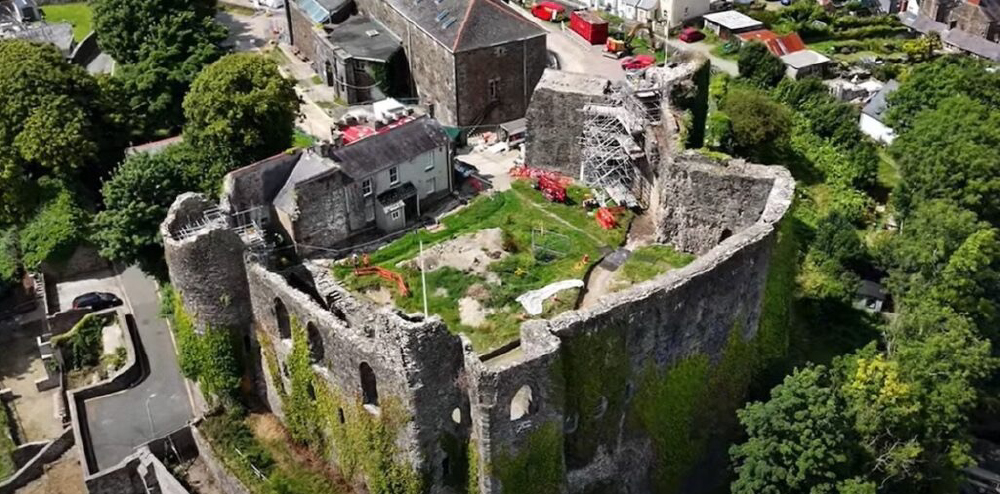
Haverfordwest Castle is undergoing a £17.7m redevelopment that will turn the historic Pembrokeshire site into a major heritage attraction when it reopens in 2028.
The castle, which is over 800 years old, has long been a defining feature of Haverfordwest. Its walls, towers and surviving inner structures overlook the riverside town, giving the site strong potential as both a cultural asset and an anchor for local regeneration.
The project will create an immersive and interactive exhibition space focused on Pembrokeshire’s history, identity and communities. It will also include a refurbished Haverfordwest Museum within the Governor’s House, a new café using local produce, and a 500-seat outdoor event space designed to support live music and seasonal programming.
For the heritage, museum and visitor experience sectors, the scheme reflects a growing emphasis on multi-use cultural destinations. Historic sites are increasingly being planned as platforms for interpretation, hospitality, events and civic activity, rather than as static monuments.
Conservation And Interpretation Working Together
Current works include conservation of the castle walls, preparation of the former gaol building, refurbishment of the Governor’s House and development of the outdoor event space. During the construction phase, the Town Museum has been relocated to the Riverside in Haverfordwest town centre, while the castle car park remains closed.
The site’s layered history gives designers and interpretive planners substantial material to work with. Haverfordwest Castle was first recorded in 1188 and later ordered to be destroyed by Oliver Cromwell in 1648. In the 18th century, parts of the site were adapted for use as a prison. Several towers, sections of the inner ward and parts of the inner keep remain.
The new visitor offer is expected to present these stories through playful, physical and digital experiences. The focus will be on Pembrokeshire’s creativity, resourcefulness, myths, legends, natural forces and sense of place. This direction suggests a model that combines heritage interpretation with interactive design, giving audiences accessible ways to engage with complex local history.
A Wider Regeneration Role
The castle project forms part of a broader regeneration programme for Haverfordwest. By bringing museum activity, events, food and drink, and public space into one historic site, the development is intended to support town centre footfall and create economic value across the wider area.


The 500-seat outdoor venue is particularly significant from an operational perspective. Summer events and live performances could extend visitor dwell time, support repeat attendance and provide a platform for partnerships with cultural producers, community organisations and local suppliers.
For councils and destination teams, the scheme offers an example of how heritage assets can be repositioned as active contributors to local economies. Rather than relying only on admissions, sites of this type can generate value through events, hospitality, education, venue hire and linked town centre spending.
Funding And Delivery Partnerships
The redevelopment is being funded by the UK Government, The National Lottery Heritage Fund and the Welsh Government’s Transforming Towns fund, with match funding from Pembrokeshire County Council.
Pembrokeshire Councillor Paul Miller has described the project as an ambitious step towards creating a flagship heritage attraction with benefits for both the town and surrounding area.
For companies working in visitor experience design, conservation, interpretation, digital media, events and cultural operations, Haverfordwest Castle represents the type of project likely to shape future heritage investment. It brings together preservation, storytelling, public access and commercial programming within a single destination framework.
As the scheme moves towards its planned 2028 reopening, it will be closely watched by heritage professionals seeking practical models for bringing historic town assets back into productive public use.


