
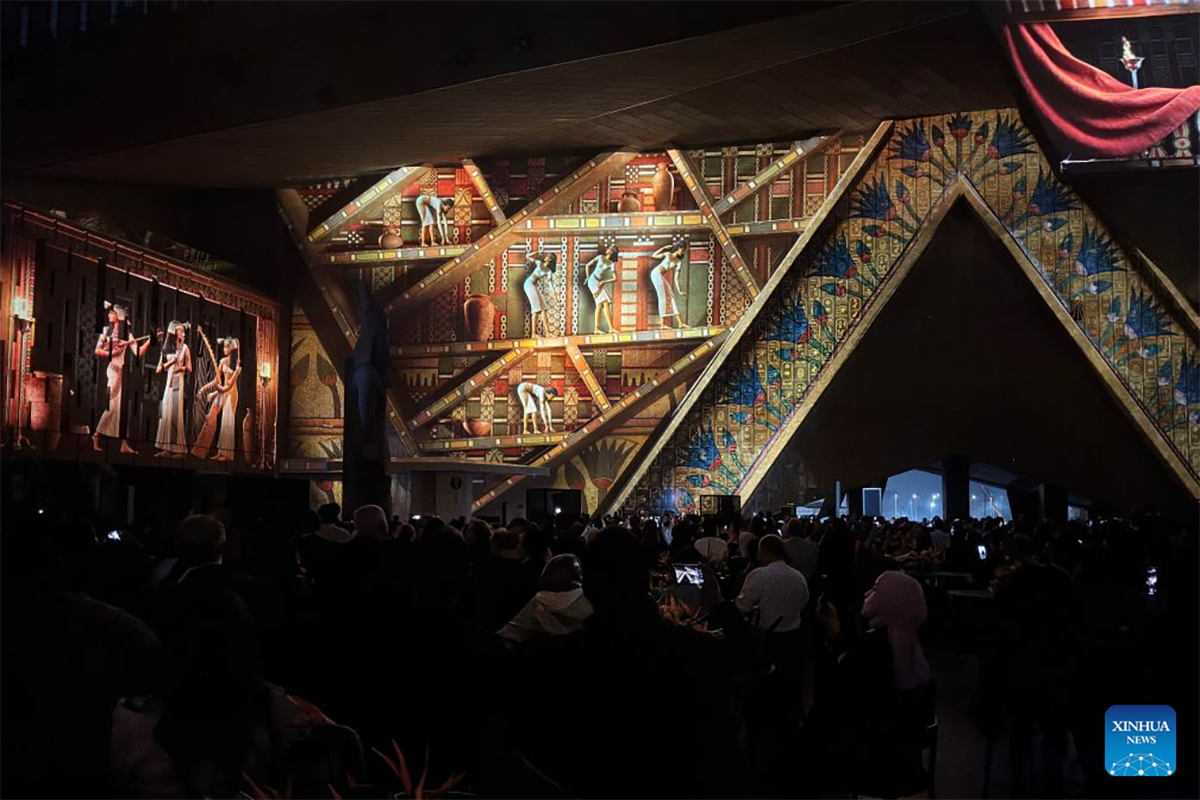
The Grand Egyptian Museum (GEM) in Giza has launched Eternal Sun, a 35-minute immersive light and sound production combining architectural projection mapping, theatrical lighting, live music and historical storytelling. The experience opened on 1 November 2026, marking the first anniversary of the museum’s official opening.
Presented within the museum’s Grand Hall, the production uses audiovisual technology to interpret ancient Egyptian civilisation through the natural cycles that influenced its cultural development. The six-month programme is scheduled to run until 30 April 2027, adding a temporary experiential attraction to the institution’s existing cultural offer.
For museum operators, exhibition designers and immersive technology specialists, the project demonstrates how large architectural interiors can accommodate programmed experiences that complement permanent collections.
Architectural Projection Mapping Supports Historical Storytelling
Eternal Sun explores the relationship between ancient Egyptian society and its natural environment, drawing on recurring events including sunrise, sunset, the Nile’s annual flooding and agricultural harvests.
These historical themes provide the narrative structure for an audiovisual presentation that uses the Grand Hall as its principal performance setting. Architectural projection mapping introduces visual content directly onto the surrounding environment, supported by synchronised lighting, live musical performance and narration in Arabic and English.
The combination of projected imagery and physical architecture provides an alternative to conventional object-based interpretation, allowing historical themes to be communicated through spatial presentation.
For creative studios and exhibition production companies, this approach highlights the potential of projection-based storytelling in museum environments, particularly where existing architectural features can become part of the presentation without requiring extensive permanent exhibition infrastructure.
Integrating Live Performance With Digital Interpretation
A notable aspect of Eternal Sun is its combination of live music with digitally produced visual sequences. This introduces a performance component alongside the technical systems responsible for delivering the projected content.
Productions of this type require coordination between audiovisual designers, lighting specialists, sound engineers, performers and museum operations teams. Synchronisation, audience positioning and the management of lighting conditions are important considerations when developing experiences within large public interiors.



The bilingual storytelling format also reflects the importance of language accessibility in international cultural institutions.
Ahmed Ghoneim, CEO of the Grand Egyptian Museum, has positioned the production within the institution’s broader efforts to communicate archaeological and historical knowledge through contemporary presentation methods.
Six-Month Programme Expands Museum Experience Offering
The introduction of Eternal Sun follows a significant first year of operations for the Grand Egyptian Museum. According to Ghoneim, the institution has recorded over five million visitors since its official opening.
The limited six-month presentation provides an opportunity to introduce new programming without making permanent changes to the museum’s core exhibition offer.
For cultural attraction operators, temporary immersive installations can support programming flexibility, create opportunities for specialist production partnerships and provide additional ways to interpret existing collections and historical narratives.
Implications For Museum And Immersive Experience Sectors
Eternal Sun reflects the increasing use of architectural projection, live performance and audiovisual storytelling within major cultural institutions.
The project offers a relevant example for museum developers and experience designers considering how large circulation spaces and public halls can support interpretive programming alongside their primary functions.
As the production continues until April 2027, its delivery will provide a practical reference for integrating immersive media, live performance and heritage interpretation within an operational museum setting.


