
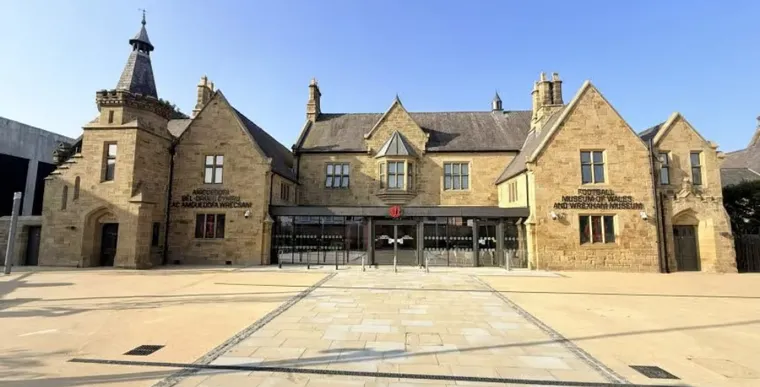
The Football Museum of Wales and Wrexham Museum will open on Friday 25 September 2026, marking a major milestone for one of North Wales’ most significant cultural and heritage projects.
The venue will bring together Wales’ national football story and Wrexham’s local history within the historic County Buildings. The project has created a greatly expanded museum offer, combining restored heritage architecture with modern exhibition spaces and a broader interpretation strategy.
For the attractions and cultural infrastructure sectors, the opening date provides a clear marker for a project that has drawn attention across Wales and beyond. It places Wrexham at the centre of a national sporting heritage offer while strengthening the city’s wider cultural and tourism profile.
Free ticket booking arrangements are expected to be announced in advance of opening, with the museum scheduled to welcome its first visitors from 10am on 25 September 2026.
A Dual Museum Model For Wrexham
The new venue will house both the Football Museum of Wales and Wrexham Museum, giving operators and destination planners a useful example of how national collections and local narratives can be presented within a single site.
The football museum will focus on Welsh football heritage, sporting identity and the communities connected to the game. Wrexham Museum will continue to tell the story of the city, its people and its development, supported by new displays and upgraded facilities.
This combined model gives the attraction several audience entry points. It can serve local communities, education groups, cultural tourists, sporting audiences and international visitors with an interest in Welsh football. For museum professionals, the project shows how a civic museum can be repositioned through a major national theme while retaining its local purpose.
The decision to base the football museum in Wrexham also carries strong strategic value. The city is widely recognised as an important place in Welsh football history, giving the venue a clear sense of location and relevance.
Investment Across Culture, Heritage And Regeneration





The project has been supported by a wide funding base, including Welsh Government, The National Lottery Heritage Fund, Welsh Government’s Transforming Towns programme, the UK Government Shared Prosperity Fund, The Wolfson Foundation, the V&A Purchase Grant Fund and Wrexham County Borough Council.
This funding mix underlines the project’s importance beyond museum delivery. It sits within wider priorities around cultural investment, town centre activity, heritage building reuse and regional visitor economy growth.
Wrexham Council has positioned the museum as a major asset for the city centre and wider North Wales region. The redeveloped venue is expected to support footfall, increase destination appeal and create new opportunities for partnerships across tourism, hospitality, education and cultural programming.
For B2B audiences, the project also highlights the value of aligning heritage interpretation with place-based economic strategy. By combining a national sporting collection with a civic museum, Wrexham is building a destination asset with both cultural depth and commercial relevance.
Heritage Building Reuse With Contemporary Interpretation
The venue is housed within the Grade II Listed County Buildings, with the project retaining the character of the site while introducing a new museum layout and fit-out. This balance between conservation and modern visitor requirements will be of interest to architects, exhibition designers, heritage consultants and local authorities managing similar civic assets.
The removal of external hoardings in late August will signal the final stage of preparation, as internal works and operational planning move towards completion. Council leaders have described the scheme as a major step for Wrexham’s cultural offer, crediting the museum team and funding partners for bringing the expanded venue towards delivery.
As the opening date approaches, the Football Museum of Wales and Wrexham Museum is set to become a key case study in sport-led heritage development, listed-building reuse and regional destination planning.


