
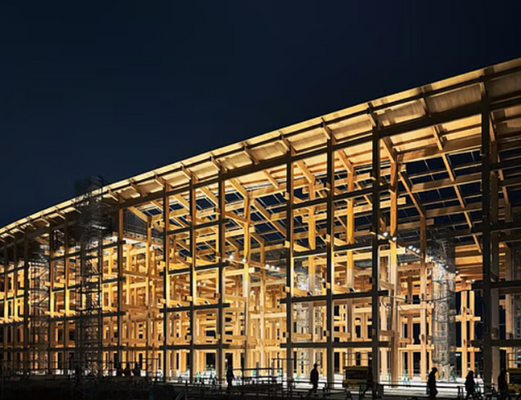
As Expo 2025 Osaka approaches, excitement builds around Sou Fujimoto’s Grand Roof, a spectacular wooden structure destined to become a focal point of the event. Newly released construction photos reveal the progress on what is set to be one of the world’s largest wooden buildings, symbolising a leap forward in sustainable architecture. Scheduled to begin on April 13, 2025, the Expo will run for six months on the manmade Yumeshima island, promising to be a showcase of successful cooperation and innovation from countries around the world.
The Grand Roof spans an impressive 600 metres in diameter and is designed to be the main circulatory route for the Expo, which will feature pavilions from 161 participating countries and regions. The structure’s design draws inspiration from the Stage of Kiyomizu Temple in Kyoto and other historic examples of Japanese timber architecture, reflecting a deep respect for tradition alongside cutting-edge architectural practises.
Fujimoto’s vision for the Grand Roof is to embody the theme “Unity in Diversity.” The structure supports an aerial walkway offering visitors spectacular views into the arena-like layout of the exhibition grounds, segmented into three thematic zones: Pavilion World, Water World, and Green World. This strategic division enhances the visitor experience, allowing for a curated journey through varied landscapes and exhibits.
The Grand Roof’s design is not only a nod to cultural heritage but also a bold statement on the future of construction. It covers a horizontal projected area of 60,000 square metres (approximately 646,000 square feet), showcasing the potential of wooden architecture to support large-scale, sustainable construction. Fujimoto emphasises the symbolic nature of the roof, stating, “I want people to feel that this one sky is connecting all parts of the world full of diversity as is shared by everyone.” This sentiment captures the spirit of the Expo, which aims to foster global unity and celebrate cultural diversity.




In line with Japan’s national policy to reduce carbon emissions by 46% by 2030, the Expo’s focus on wooden structures like the Grand Roof is timely. The use of wood, a renewable resource, in such prominent projects reflects a broader shift towards sustainability in architecture. This movement is further exemplified by the participation of other renowned architects like Shigeru Ban, who designed the official Japanese Pavilion using eco-friendly materials such as paper tubes, bamboo, and carbon-fibre-reinforced plastic.
The Grand Roof is set to become a landmark example of how traditional materials can be reimagined for modern purposes, potentially inspiring a new wave of ecological architecture around the globe. Fujimoto’s design promises not only to advance the architectural field but also to highlight the role of architecture in addressing global challenges such as climate change and sustainability.
As the Expo 2025 Osaka continues to take shape, the Grand Roof stands as a testament to the possibilities of innovative, eco-conscious design. It is poised to attract millions of visitors, offering them a unique blend of artistic vision, historical homage, and a glimpse into the future of the construction industry at large. Fujimoto’s creation will undoubtedly leave a lasting impact on the architectural world, demonstrating that large-scale sustainable design is not only feasible but also essential for our collective future.


