
Multi-award-winning hospitality interior design practice Ellis Design Studio has completed the interiors for Poolhouse, a 21,000 sq ft flagship competitive socialising venue in Central London, combining American-inspired design, immersive storytelling and artificial intelligence-powered gameplay.
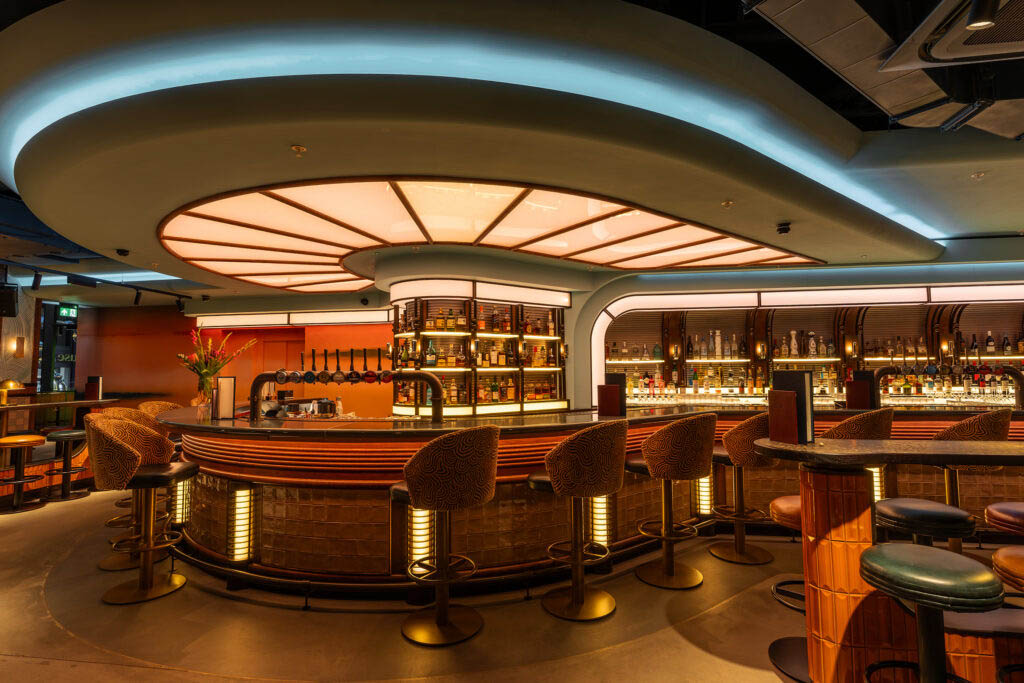
Located at 100 Liverpool Street within the Broadgate development, the two-storey venue introduces a contemporary interpretation of traditional pool halls, incorporating 20 bespoke gaming spaces and three bars within a hospitality-led environment.
Developed by the team behind Topgolf and Puttshack, Poolhouse brings together interactive entertainment, premium hospitality and distinctive interior architecture.
For leisure operators, hospitality developers and experiential design professionals, the project demonstrates how established recreational activities can be repositioned through technology, environmental storytelling and carefully considered spatial design.
Americana Influences Shape The Interior Design Concept
Ellis Design Studio has developed a visual identity inspired by American roadside culture, referencing diners, motels, traditional pool halls, casinos and historic drinking establishments.
The interiors draw upon contrasting materials, lighting treatments and decorative details to establish a distinctive atmosphere informed by the relationship between traditional American leisure culture and the glamour of vintage Las Vegas.
Artistic influences include Georgia O’Keeffe, Edward Hopper and Jack Kerouac, whose work provides references to American travel, architecture and expansive natural settings.
These influences inform a cinematic design narrative that connects the venue’s individual entertainment and hospitality areas.
Materials including polished concrete, burnished metals, decorative timber and textured surfaces contribute to the interior’s visual character.
For themed entertainment designers, the project provides an example of how cultural references can establish a coherent identity across a large-scale hospitality destination.
Distinctive Gaming Spaces Support Immersive Entertainment
Poolhouse incorporates 20 individually designed pool suites, combining bespoke furniture, decorative finishes and integrated gameplay technology.
The pool tables feature contemporary forms and distinctive material treatments, while illuminated installations positioned above the playing surfaces accommodate technological equipment.
Individual spaces incorporate hand-painted details, patterned wall finishes and tailored lighting, creating varied environments within the wider venue.




A central staircase connects the two floors, using colour and decorative treatments to establish visual continuity between the hospitality and entertainment areas.
Additional themed spaces include Queen Vera’s, inspired by British pool player Vera Selby, and The Jungle Room, referencing the distinctive interiors associated with Elvis Presley’s Graceland.
These environments demonstrate how individual spaces can maintain separate identities while contributing to a consistent overall design concept.
AI-Powered Gameplay Connects Technology With Traditional Recreation
A defining feature of Poolhouse is its incorporation of artificial intelligence-enabled gaming technology into conventional pool tables.
The system introduces interactive game formats and adaptable gameplay, allowing the venue to accommodate different levels of playing ability.
By integrating digital functionality within familiar recreational equipment, the concept connects traditional competitive activities with contemporary entertainment technology.
For family entertainment centre developers and competitive socialising operators, this approach demonstrates opportunities to introduce interactive digital systems without replacing established physical games.
Implications For Hospitality And Experience-Led Leisure Design
Poolhouse represents a significant example of how experiential interior design can contribute to the commercial positioning of competitive socialising venues.
Its combination of themed environments, bespoke gaming infrastructure and hospitality facilities provides a reference for operators developing integrated leisure destinations.
For designers, technology suppliers and attraction developers, the project highlights the importance of coordinating physical environments with interactive systems and operational requirements.
Ellis Design Studio’s work illustrates how narrative-led interiors and emerging gaming technologies can support distinctive hospitality concepts within established urban entertainment markets.


