
China’s retail sector is placing greater emphasis on experience-led commercial environments, as operators respond to changing expectations around shopping, leisure and cultural participation.
Across major cities and regional destinations, retail schemes are moving beyond conventional store layouts by combining independent brands, dining, entertainment, heritage settings and interactive activities. For developers, designers and operators involved in visitor attractions and commercial placemaking, the shift shows how retail assets can be repositioned as multi-use destinations with stronger dwell time and broader audience appeal.
In Chongqing, the rooftop commercial cluster at the Sino-Swiss Technological Innovation Park offers one example of this direction. The site brings together independent labels, specialist food and beverage operators and indoor gardens within an industrial-style environment. Its appeal lies in giving niche retailers a setting that supports identity, discovery and repeat visits, rather than relying only on high-volume footfall.
Project operators have noted rising demand for stores built around focused product categories. This points to a growing opportunity for specialist retail concepts that can attract defined communities of buyers while contributing to the wider atmosphere of a destination.
Culture And Participation Shape New Leisure Formats
Retail and leisure projects in China are also drawing on cultural programming to increase visitor engagement. In Gaomi, Shandong province, Red Sorghum Town uses its association with Zhang Yimou’s film Red Sorghum as the basis for night-time activity, combining performance, interactive formats and local culture.
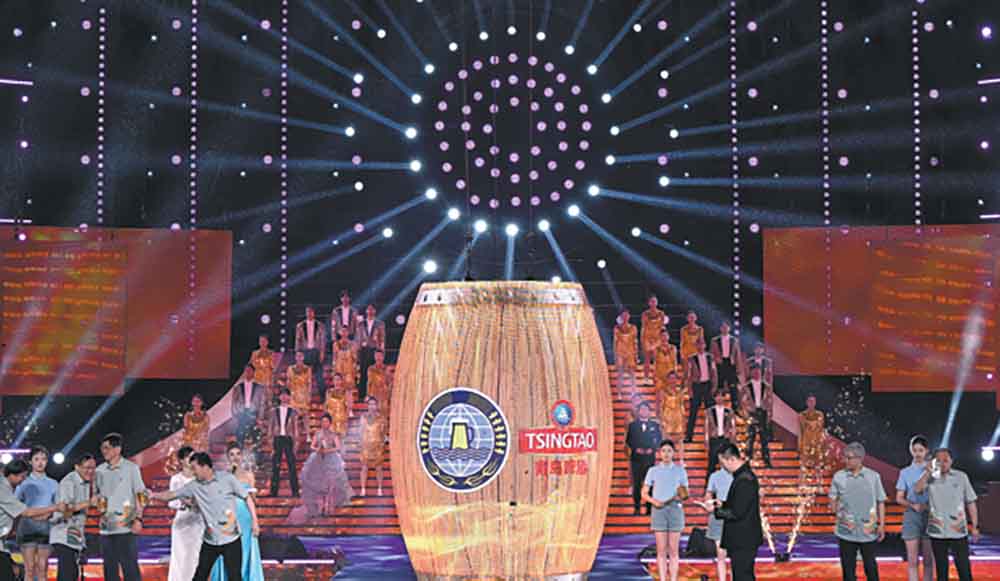
Nearby, the Qingdao International Beer Festival illustrates how large-scale events are shifting from spectator-led formats towards more active participation. Visitors are able to plan their own routes through evening programmes, giving operators a flexible model for managing flow, extending operating hours and encouraging spend across multiple areas.
For the wider experience economy, these examples show the commercial value of programming that links food, culture, entertainment and place identity. They also point to the importance of creating environments that can support repeatable events, seasonal content and audience-led movement through a site.
Heritage Reuse Adds Value To Commercial Assets
Adaptive reuse is becoming another important route for retail and leisure operators seeking to give older assets a new commercial role. In Chongqing, Jiangling Teahouse has been developed inside a former 1950s cinema linked to a state-owned factory.


The venue retains the building’s original structure while introducing traditional tea culture and social activity. Its audience includes former factory workers, their families, local residents, younger visitors and tourists, showing how heritage-led commercial spaces can connect memory, community and new revenue streams.
For developers and cultural operators, this approach offers a useful model for bringing underused buildings back into active use. Rather than removing historic character, projects can build value by working with existing architecture, local identity and intergenerational audiences.
Policy Support Strengthens The Outlook
Established shopping centres are also rethinking the role of environment and leisure. The Ring in Chongqing incorporates an indoor tropical rainforest with planting, water features and dining areas, showing how biophilic design and themed environments can support commercial differentiation.
Policy is adding further momentum. In July, China released a special plan under the 15th Five-Year Plan framework for 2026 to 2030, calling for new consumption scenarios and more immersive, interactive commercial areas.
Official data shows total retail sales of goods and services rose 2.6 percent year on year in the first seven months, with services retail up 5 percent and goods retail up 1.1 percent. Chinese authorities expect total retail sales of consumer goods to reach around 60 trillion yuan, about $8.94 trillion, by 2030.
For international attraction specialists, designers and technology providers, China’s retail sector offers a clear signal: commercial destinations are increasingly being judged on programming, spatial design, cultural relevance and operational flexibility.


