
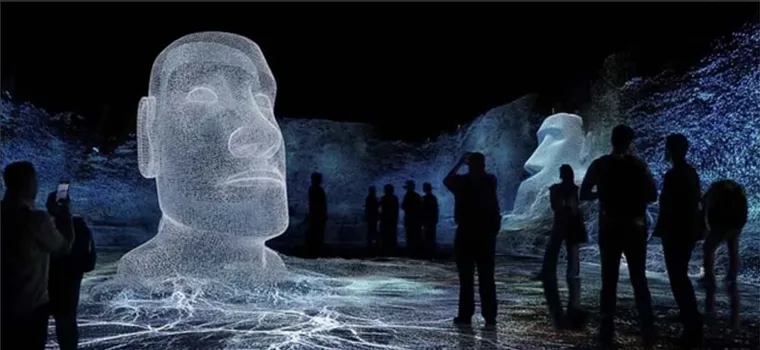
DEM Museums will open Timewalk Exhibition at Immerse LDN, Excel Waterfront, in July 2026, adding a large-scale cultural production to London’s growing immersive entertainment and visitor experience offer.
The walk-through exhibition will present a sequence of ancient civilisations through audio, visual design and multi-sensory environments. Its focus will move from Göbeklitepe to Babylon, Ancient Egypt, the Maya and Rapa Nui, using archaeological research and cinematic techniques to present history through scale, atmosphere and human detail.
A Full-Scale Approach To Cultural Interpretation
Timewalk has been developed as an immersive walk-through format rather than a traditional object-led gallery display. This positions the production within a growing sector where cultural storytelling, spatial design and digital media are being used to create broader access to historic subjects.
The exhibition begins with Göbeklitepe, widely associated with early communal gathering and ritual activity. From there, the format follows major stages in human development, including urban systems in Babylon, beliefs around immortality and order in Ancient Egypt, Maya knowledge of mathematics and astronomy, and the cultural role of the Moai on Rapa Nui.
For museums, cultural operators and experience designers, the project reflects a continued interest in interpretation that gives audiences a sense of place and context. Rather than presenting ancient societies as static ruins, Timewalk aims to show them as active environments shaped by belief, social organisation, knowledge and collective identity.
Audio-Visual Storytelling For Historic Content
The production will use large-scale visual effects, soundscapes and narration to recreate scenes including cities, temples, monuments and everyday activity. These elements are designed to help audiences understand how ancient civilisations were built, how they functioned and why their ideas still hold relevance.
For the visitor experience sector, this approach demonstrates how immersive media can support historical interpretation without removing the need for research-led content. DEM Museums has positioned Timewalk as a production grounded in archaeology, with creative design used to communicate scale, mood and meaning.
The inclusion of scenes such as the Nile at sunset and the city gates of Babylon suggests a strong emphasis on spatial storytelling. For operators, this highlights the commercial and educational potential of combining theatrical pacing, environmental design and factual interpretation within a single visitor format.



Accessibility And International Reach
A 25-language audio guide will be included as part of the exhibition, supporting access for international audiences and reflecting London’s role as a global visitor market.
For destination operators, multilingual interpretation is an important consideration when developing major cultural attractions. It can widen audience reach, support group sales, improve educational use and make exhibitions more suitable for tourism markets.
The decision to locate Timewalk at Immerse LDN also places the project within a venue setting associated with large-scale immersive productions. For producers and landlords, this shows the continued demand for flexible spaces that can host cultural, commercial and entertainment-led formats with international appeal.
Implications For The Visitor Experience Sector
Timewalk adds to the growing use of immersive formats in cultural programming, particularly for subjects that benefit from scale, movement and atmosphere.
For museums and attractions, the project may offer useful lessons in how historic content can be presented beyond conventional displays. For brands, venues and creative studios, it also reinforces the value of combining research, sensory design and audience flow to create memorable cultural experiences.
DEM Museums’ latest production points to a market where education, entertainment and destination strategy continue to overlap. In that context, Timewalk is likely to be watched closely by organisations developing the next generation of cultural visitor experiences.


