
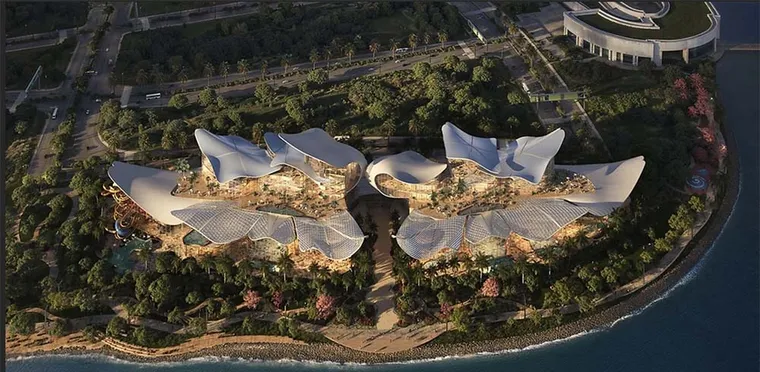
Therme Singapore is set to open at Marina South in 2030, bringing a major wellbeing-led attraction to one of Asia’s most prominent urban waterfront districts.
The project is being developed by Therme Group with Kajima Overseas Asia and DP Architects, supported by Therme Group’s in-house design and planning team, Therme ARC. The scheme is being positioned as Asia’s first large-scale integrated wellbeing destination, combining thermal bathing, water recreation, treatment facilities, dining, planted environments and public park space.
For operators, investors and destination planners, the development reflects the growing commercial strength of wellness as a visitor experience category. The model brings together family leisure, health-led relaxation, hospitality and social space within a single high-capacity venue.
Spanning more than 720,000 sq ft across seven levels, including a basement, Therme Singapore will have a footprint comparable to around nine football fields. Its scale suggests a destination designed to serve residents, business visitors and international travellers, while adding a new anchor attraction to Marina South.
Vertical Zoning For Different User Needs
The project is structured around three principal zones: Play, Relax and Restore. This vertical organisation allows different types of experience to sit within one building while supporting separate user moods, dwell times and operational requirements.
Play will include children’s pools, interactive water areas and 18 slides, with a combined slide length of around 1.8km. This section gives the scheme a strong family and recreation component, widening its market beyond spa and wellness audiences.
Relax will focus on thermal pools, mineral baths, hydromassage beds, infrared therapy and quieter aquatic areas. This zone shifts the visitor proposition towards recovery and rest, creating a more measured environment within the same destination.
Restore will provide saunas, steam rooms and treatment rooms, supporting longer-format wellness visits and higher-value service models. For operators, this type of zoning can improve capacity management and create varied price points, from active water play to premium recovery and treatment use.
Hospitality And Public Waterfront Value




More than 86,000 sq ft will be allocated to dining and gathering areas, with spaces planned to face the sea. This hospitality component is commercially important, as food and beverage can extend dwell time, support group visits and broaden the destination’s appeal outside core bathing and treatment activity.
The external offer is also significant. The development will include planting with more than 200,000 plants across over 200 species, including orchids and native Southeast Asian varieties. A 4-hectare coastal park will connect the site towards Marina Barrage, adding a public waterfront route to the wider Marina South area.
For urban planners and mixed-use developers, this public-facing element is central to the project’s value. Therme Singapore is not only being planned as an indoor paid attraction, but also as part of a wider waterfront setting with civic and environmental uses.
Technology And Sustainable Operations
Operational technology will play a major role in the guest management model. RFID wristbands are planned for locker access and payments, while robotic locker systems will support storage logistics. Water quality will be managed through advanced filtration using ozone technology.
The sustainability strategy includes climate-responsive planting, smart irrigation, solar panels and energy-efficient systems. For large-scale wellness attractions, these elements are important to both operating cost and public credibility, particularly in warm urban environments where energy and water use require careful control.
For the global visitor experience sector, Therme Singapore points to a growing convergence between wellness, leisure, hospitality and urban infrastructure. Its progress will be watched closely by developers considering large-format wellbeing destinations in dense city settings.


