
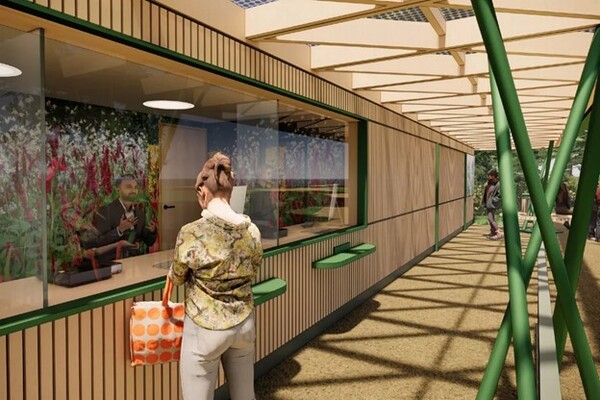
The Royal Botanic Gardens, Kew, has set out proposals to renew several of its visitor entrances, beginning with Brentford Gate in southwest London. The plans form part of a longer-term programme aimed at addressing ageing infrastructure and repositioning arrival points as functional, welcoming and operationally effective spaces within a world-renowned institution.
Submitted to Richmond Council, the Brentford Gate proposals represent the first phase of works across three of Kew’s four entrances. Internal assessments identified Brentford Gate as the most urgent priority, with Lion Gate and Elizabeth Gate expected to follow once funding allows. Victoria Gate, the principal entrance, was not included due to its comparatively strong condition.
Arrival Spaces Under Growing Scrutiny
Kew’s planning documentation acknowledged that several entrance facilities no longer reflected the status or values of the organisation. Temporary kiosks and admissions buildings were described as outdated, with layouts that no longer met current expectations around accessibility, comfort or staff welfare.
For operators across gardens, museums and heritage attractions, this acknowledgement reflects a broader sector shift. Arrival areas are increasingly viewed as part of the overall experience and not simply transactional zones. Poorly designed entrances can undermine an otherwise high-quality offer, particularly for repeat visitors, members and group arrivals.
Brentford Gate As A Pilot Project
The Brentford Gate scheme proposes the removal of multiple small kiosks, replaced by a single admissions building positioned further back from the gate line. This repositioning is intended to open up sightlines into the gardens and create a clearer sense of arrival, while also improving the experience of queueing during busy periods.
A canopy structure forms part of the proposal, providing shelter and solar control. Internally, the new building is designed to bring together admissions, customer service and staff facilities in a single, coherent layout. From an operational standpoint, this consolidation supports more efficient staffing models and clearer separation between public and back-of-house functions.
Accessibility, Staff Welfare And Operational Clarity





Feedback gathered by Kew during its review highlighted significant concerns around existing welfare facilities at Brentford Gate. Issues included poor hygiene, limited privacy and a lack of suitable spaces for staff breaks and food preparation. Addressing these conditions formed a central driver of the redevelopment.
For the wider attractions sector, the emphasis on staff environments is notable. Investment in welfare facilities is increasingly recognised as essential for recruitment, retention and service quality, particularly in high-volume, visitor-facing roles. Kew’s approach positions staff experience as integral to the success of front-of-house operations.
Supporting Different Visitor Types
The proposed admissions building is intended to support both fast entry for frequent visitors and personal assistance for those requiring face-to-face support. This dual approach reflects the complexity of modern visitor flows, where digital ticketing, memberships, and on-site purchases must operate seamlessly without friction.
Clearer wayfinding, improved accessibility and consistent brand presentation were all identified as outcomes of the project. Importantly, the design brief also acknowledges Kew’s multiple identities as a heritage site, scientific institution and cultural venue, each of which needs to be legible from the point of arrival.
A Reference Point For Sector Investment
While focused on a single entrance, the Brentford Gate project sets a reference for future upgrades across the estate. It also offers a case study for other major attractions managing historic assets under contemporary operational pressures.
By prioritising arrival spaces, Kew Gardens is signalling that first impressions, staff conditions and functional clarity carry strategic weight. For organisations planning capital investment, the project underlines the value of treating entrances as long-term assets rather than temporary solutions.


