
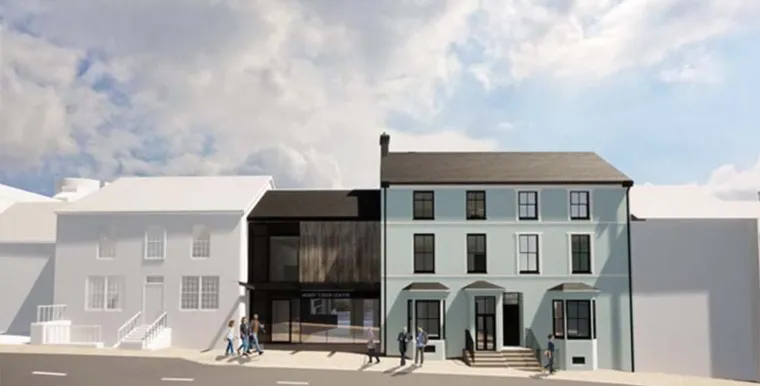
Plans of the Henry Tudor Centre in Pembroke are moving forward, with exhibition designs now being shared as the project prepares for an expected Spring 2027 opening.
The centre will be based in Pembroke Town Hall, a Grade II listed building currently undergoing renovation. Once complete, it will tell the story of Pembroke-born Henry Tudor, later King Henry VII, including his rise to the throne and the beginning of the Tudor dynasty.
For heritage operators, museum designers, local authorities and cultural destination teams, the project offers a useful example of how historic civic buildings can be adapted into multi-use cultural assets. Alongside the exhibition, the centre will include a public library, replacing the current library on the Commons, as well as a café.
Public Input Into Exhibition Design
The Henry Tudor Trust will be operating the centre, and is inviting views on how the exhibition should present Henry Tudor’s story. Design proposals created by Image Makers are being exhibited at the Pembroke Town Hall from 22 to 29 May, with feedback forms available.
This consultation stage is important for the project’s interpretive development. By involving local stakeholders before the exhibition is finalised, the trust and design team can test how effectively the content communicates Pembroke’s connection to Henry Tudor, the political context of his rise, and the wider significance of the Tudor dynasty.
For the museum and attractions sector, this public review process reinforces the value of audience involvement during exhibition planning. Early feedback can help refine tone, accessibility, pacing, object presentation, and narrative structure, reducing the risk that interpretation feels detached from local identity.
Multi-Use Cultural Infrastructure
The inclusion of a public library and café gives the Henry Tudor Centre a broader civic purpose beyond heritage interpretation alone. This type of mixed-use model is increasingly relevant for towns seeking to strengthen cultural infrastructure while improving everyday access to public services.





Combining exhibition space with library provision can support repeat local use, educational engagement and longer-term audience development. The café element may also contribute to dwell time, secondary spend and the centre’s financial sustainability.
From a B2B perspective, the scheme could create opportunities across exhibition design, fit-out, conservation work, interpretation, access planning, lighting, digital media, learning resources, hospitality design and visitor operations. It also shows how heritage-led regeneration can be structured around both destination appeal and local community use.
Funding Supports Long-Term Activity
The capital project has received funding from Pembrokeshire County Council, the UK Government and the Welsh Government. Additional support from The National Heritage Lottery Fund will contribute to events, activities, volunteering and educational resources for schools.
This wider activity funding is significant. For new heritage venues, building restoration and exhibition installation are only part of the delivery challenge. Long-term value also depends on programming, partnerships, volunteer capacity, school engagement and operational planning.
The Henry Tudor Centre’s development points to a model in which heritage interpretation, civic services and learning activity are planned together from the outset. As the project advances towards its planned 2027 opening, its progress will be relevant to cultural venues and local authorities looking to bring listed civic buildings back into active public use while strengthening place-based heritage tourism.


