
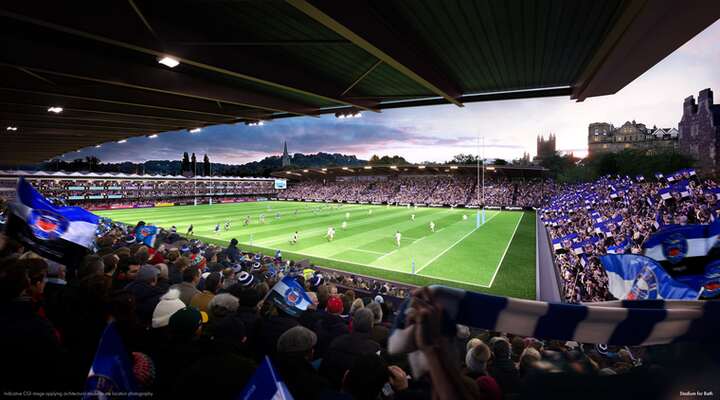
Bath Rugby’s long-anticipated plans for a new stadium at the Rec have taken a significant step forward, with Bath & North East Somerset Council voting overwhelmingly (8–1) in favour of the project. The proposals, designed by destination architects Kay Elliott, outline a new 18,000-seat stadium that will transform the historic ground into a world-class sporting and community destination at the heart of Europe’s only dual UNESCO World Heritage city.
The Rec has been the home of Bath Rugby since 1894, making it one of the most iconic rugby venues in the UK. The redevelopment aims to respect that legacy while positioning the site for the future, balancing heritage protection with commercial sustainability.
Heritage Sensitivity, Community Support
Public consultation for the scheme generated over 5,000 responses, with around 95% backing the proposals. Significantly, statutory consultees including UNESCO, Historic England, Natural England and the Environment Agency raised no objections, recognising the sensitivity and strength of the design.
The project promises far more than a stadium upgrade. Alongside a transformational matchday experience, it will deliver:
-
Improved public access to the riverside.
-
Enhanced year-round community facilities.
-
A new destination venue for both sport and culture.




As highlighted in industry coverage from Blooloop, the development positions sport-led regeneration as a catalyst for placemaking in one of the UK’s most heritage-sensitive cities.
A Destination with Global Context
For Kay Elliott, the scheme represents the continuation of a 46-year track record delivering destination-defining projects worldwide. With a portfolio spanning theme parks, aquaria, cultural icons and waterfront regeneration across 34 countries, the practice’s designs currently welcome more than 60 million visitors annually.
The Bath project reflects this expertise – weaving together sport, community, and heritage in a blueprint designed to unlock economic, social and environmental value.
Next Steps
While Bath & North East Somerset Council has resolved to approve the application, the proposals are currently with the Secretary of State for review. Given the absence of objections from statutory consultees – including UNESCO – and the quality of the scheme, hopes are high for a smooth return to the Council for final approval.
If successful, the project would represent a once-in-a-generation transformation for Bath: a new destination that honours its past while shaping a sustainable, community-focused future.


