
As of mid-2025, a clear shift is evident across international airports: they are no longer treated merely as transport infrastructure but as venues for cultural engagement. The growing integration of curated, large-scale art has repositioned airports as dynamic cultural interfaces, where art, identity and public space intersect.
The Skytrax Awards’ 2025 spotlight on airport art reinforces this trend. Recognised terminals across Houston, Singapore, Doha, Mumbai, and Amsterdam have strategically embedded visual art to engage travellers and amplify local narratives. For professionals in the visitor experience sector, this signals the increasing importance of cultural programming in transient environments.
Houston: Industry, Identity and Interactive Design
Houston’s airport system sets a high standard, merging industrial heritage with contemporary art. George Bush Intercontinental’s large-scale sculptures reflect the city’s aerospace and energy legacy, while vibrant murals give voice to Houston’s immigrant communities. Hobby Airport’s interactive sound-light installations spotlight local musical traditions, offering moments of engagement within high-traffic terminals.
Together, these elements position Houston’s airports as active storytellers, reflecting the city’s social and economic character while also creating memorable waypoints for passengers.
Singapore: Kinetic Expression Through Precision
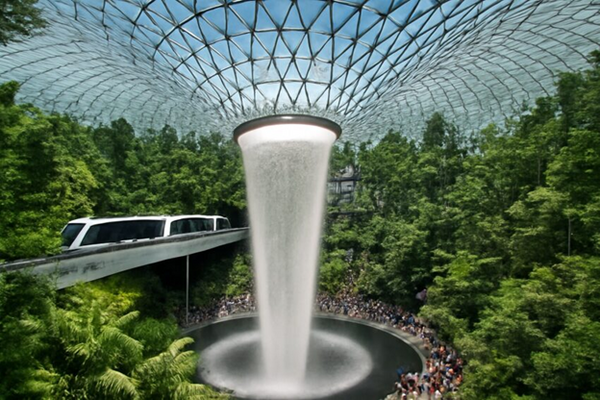
Singapore Changi’s approach is rooted in the seamless integration of technology and aesthetics. Kinetic Rain and Petalclouds transform ceiling space into performance art using motion-controlled sculptures and carefully calibrated lighting. These installations offer meditative, visually fluid experiences, reinforcing Singapore’s design ethos and commitment to quality of environment.
Changi’s success lies in its ability to use art as a functional element of placemaking. The airport’s installations act as sensory anchors that reduce travel anxiety while promoting visual storytelling.
Doha: Architectural Dialogue Between Past and Present
At Hamad International, architectural references to Islamic design coexist with contemporary sculpture. Playful large-scale pieces such as a 23-foot bronze teddy bear contrast with ceiling designs modelled on traditional mashrabiya screens. Sculptures of falcons bring Qatari national identity into a modern context through metal and glasswork.
For B2B stakeholders, Hamad’s program exemplifies how airport design can bridge cultural authenticity with global appeal, offering a strong reference for art-led placemaking.


Mumbai and Bangalore: Contemporary India on Display
Chhatrapati Shivaji Maharaj International Airport in Mumbai uses digital art, LED installations, and city-scale murals to highlight India’s cultural complexity. Bangalore’s Kempegowda Airport takes a different approach, combining classical dance motifs and sound-based installations with digital artwork. Both present India not just as a travel destination but as a modern, expressive nation.
These projects highlight the role of airports in reflecting regional narratives while embracing new media, opening new directions for cultural institutions working with transportation infrastructure.
Amsterdam, Vancouver and Beyond: Regional Storytelling Through Technology
Amsterdam Schiphol combines minimalist design with digital interpretations of Dutch landscapes, while Vancouver’s focus on Indigenous culture brings ancestral stories into high-visibility spaces. In both cases, local context is elevated through contemporary formats, aligning with broader trends in destination branding and cultural continuity.
Other airports, such as San Francisco and Los Angeles, prioritise diversity and entertainment heritage, offering layered narratives that speak to global audiences.
The Broader Opportunity for Experience Creators
For those developing attractions, exhibitions, or public installations, these airports provide proof of concept: visual art can transform high-footfall environments into culturally enriched spaces. By investing in well-curated, locally informed art programs, transport hubs can build identity, reduce passenger stress, and spark meaningful interactions.
Airport art in 2025 isn’t ornamental. It’s a tool for engagement, a platform for cultural expression, and a model for how transit spaces can become powerful stages for public art.


