
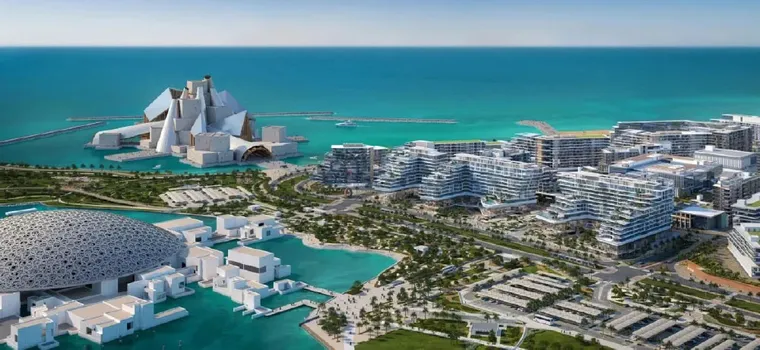
Abu Dhabi has launched Marsa Al Saadiyat, a major AED100bn, or US$27bn, waterfront destination on Saadiyat Island, delivered in partnership with Aldar.
The project covers 6.4 million square metres and represents the final phase of the Saadiyat Island masterplan. It will combine residential districts, parks, schools, healthcare facilities, community clubhouses, sports courts, beaches, pedestrian routes and cycling infrastructure within a large mixed-use coastal setting.
For developers, cultural planners, destination strategists and visitor experience teams, Marsa Al Saadiyat is significant because of its position within one of Abu Dhabi’s most important cultural and lifestyle districts. The project is being planned as a long-term residential and leisure destination, but its scale and location also give it strategic importance for tourism, placemaking, events and cultural access.
The destination will include an 8km waterfront with beaches, walking paths and a cycling track. It will also feature Abu Dhabi’s largest marina, with capacity for up to 350 berths serving sailing boats and luxury yachts.
Mixed-Use Planning Around Culture And Connectivity
Marsa Al Saadiyat will include villas, mansions, apartment buildings and branded residences, with capacity for more than 58,000 residents. Sales for the residential components are due to begin in the second half of the year, while enabling infrastructure works began in the third quarter.
The development’s connectivity is central to its wider value. Direct links are planned to other parts of Saadiyat Island and wider Abu Dhabi, while a pedestrian walkway will connect Marsa Al Saadiyat with the Cultural District. This area includes major institutions such as Louvre Abu Dhabi and the planned Zayed National Museum.
Road and tunnel connections are also planned to Umm Yifeenah Island and Reem Island, while a new Etihad Rail station is proposed for the destination. For place-based development teams, this level of transport integration is important. Large mixed-use districts depend on strong pedestrian, road and public transport links to support residents, visitors, events, hospitality and commercial activity.
The walkway to the Cultural District is particularly relevant for the attractions and cultural sectors. It has the potential to improve movement between residential, leisure and museum assets, supporting longer dwell time across Saadiyat Island and creating more connected visitor routes.


Waterfront Infrastructure And Marina-Led Destination Value
The inclusion of Abu Dhabi’s largest marina gives Marsa Al Saadiyat a clear leisure and hospitality anchor. Marina infrastructure can support private boating, luxury tourism, waterfront dining, retail, events and premium residential positioning.
For operators and investors, the marina also adds a distinct destination layer to the wider project. Combined with beaches, parks and active travel routes, it helps create a waterfront environment that can support everyday use as well as destination-led activity.
The scale of the public realm is also notable. Parks, sports courts, pools, clubhouses and community facilities suggest a planning model that places lifestyle amenities alongside residential and visitor infrastructure. This is increasingly important in major destination developments, where quality of life, access to culture and outdoor activity are often used to attract residents, investors, hospitality partners and commercial tenants.
Abu Dhabi Continues Major Destination Investment
Marsa Al Saadiyat forms part of a wider programme of major destination investment in Abu Dhabi. The emirate recently confirmed Sphere Abu Dhabi on Yas Island, valued at AED6.2bn, or US$1.7bn. Planned to open in 2029,
it will be the first Sphere venue outside the United States and is expected to accommodate up to 20,000 guests.
Together, these projects show Abu Dhabi’s continued focus on large-scale cultural, leisure and mixed-use development. Marsa Al Saadiyat adds a major waterfront and residential dimension to Saadiyat Island, while reinforcing the emirate’s position as a destination for long-term capital, tourism growth and cultural infrastructure.


