
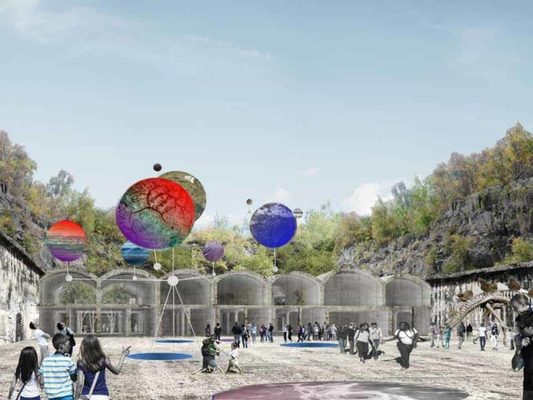
Snowdonia is set to be the home of a new global energy and climate hub, with the aim of solving some of the planet’s greatest environmental challenges. The Earth Project plans to build a multi-million-pound visitor centre at the former Glyn Rhonwy slate mine in Llanberis.
The Earth Project is a new platform for international scientists and other experts and plans for the new attraction have been drawn up by backers of the project. The visitor attraction will be constantly evolving, through research, data and ideas supplied to the hub by the experts using the platform.
Early concept images of the 6,000 square metre site show the entrance building connected to an outdoor activity centre, leading to a maze of underground tunnels and rooms for guests to explore. The entrance building will be low impact, low carbon and partly below ground to reduce visibility, although the final site layout and function will come from public engagement and feedback. Resident scientists will interact with visitors and explain incoming live data from environmental projects around the world.
Regional politicians have welcomed the new project. Jim Jones, CEO of North Wales Tourism, added: “Given the global importance of The Earth Project, it would be a real coup for the area if the future visitor hub could be based here in North Wales.” The Glyn Rhonwy site currently lies abandoned, and attracts swimmers, climbers and vandals during the summer months, leading Gwynedd Council to issue an annual warning for people breaking the rules and scaling the 6-foot fence.




As of yet the project has not been costed, and the site’s future appearance could change significantly from the concept designs, with full site investigations yet to take place before planning can begin. An initial laser survey was carried out earlier this year, funded by the National Grid and the University of Manchester.
The project has already secured the support of major universities, businesses and leading environmental experts from across the UK. Public engagement and citizen science will be a key goal for the attraction, which is set to begin construction in 2022.


