
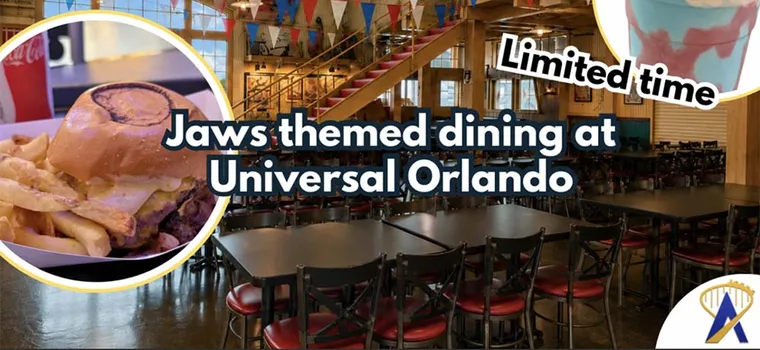
Universal Studios Florida has introduced a Jaws-themed overlay at Richter’s Burger Co., turning part of the park’s San Francisco waterfront into a seasonal Amity Island-inspired zone.
The update brings shark displays, retro props, themed food, branded photo opportunities and waterfront design cues into an area that already carries strong visual links to classic Universal Studios Florida. For operators and experience designers, the project shows how legacy intellectual property can be reintroduced through targeted placemaking without requiring a full ride redevelopment.
Jaws holds particular value within Universal Orlando’s history. The original attraction opened with Universal Studios Florida in 1990 and remained a defining part of the park until its closure in 2012. Much of the former Amity Island area later made way for The Wizarding World of Harry Potter: Diagon Alley, but small tributes to Jaws have remained across the park, maintaining a connection with long-term fans.
Restaurant Overlay As A Flexible Format
The Richter’s Burger Co. retheme gives Universal a practical way to activate Jaws nostalgia within an existing food and beverage location. The restaurant still retains parts of its previous earthquake-themed identity, creating an unusual crossover between legacy decor and the new summer overlay. While this may not be a full thematic rebuild, it demonstrates the flexibility of restaurant-based experiences as seasonal or limited-run attractions.
For theme park operators, this approach can offer several commercial advantages. It can increase visibility for an existing outlet, create new reasons to visit underused areas and support food and beverage spend through limited-time menu items. It can also test audience response before deeper investment in a property or location.
The headline food item, a large triple-patty burger combo named in reference to one of the franchise’s most famous lines, gives the overlay a clear retail anchor. Its scale and pricing position it as part of the themed experience rather than a standard menu update.
Photo Opportunities And Fan Memory
The surrounding area now includes photo opportunities tied to Amity Island, including a billboard-style installation and a ride vehicle reference. These elements are important because Jaws remains strongly associated with physical sets, practical effects and waterfront storytelling.




By bringing back visual markers from the former attraction, Universal is using guest memory as part of the experience design. This is especially relevant for mature theme parks with deep archives of retired attractions. Well-managed nostalgia can support engagement across generations while also creating shareable moments for digital channels.
The marina setting strengthens the effect. Even without the original ride, the waterfront architecture helps carry the Amity Island atmosphere, giving the overlay a credible site-specific foundation.
A Seasonal Model For Park Activation
The Jaws update reflects a wider trend in theme park programming, where seasonal overlays, food activations and photo-led environments are used to refresh existing spaces. These projects can be faster to deliver than permanent attractions, while still creating measurable value through guest interest, social content and operational lift.
For designers, the key lesson is that small-scale interventions work best when they draw from strong source material and fit naturally within the available setting. In this case, the combination of waterfront location, historic IP and existing fan attachment gives the overlay greater weight than a simple decorative campaign.
Universal Studios Florida’s Jaws-themed restaurant update demonstrates how established parks can use dormant or retired IP to create fresh activity, support dining revenue and reconnect with audience memory through focused, place-based storytelling.


