
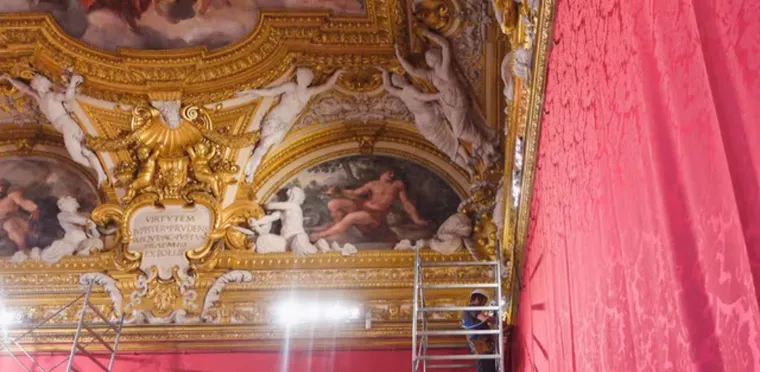
The Gallerie degli Uffizi in Florence has announced a €50m redevelopment programme covering its museums and gardens, with work planned across the Uffizi Gallery, Palazzo Pitti and the Boboli Gardens.
The programme includes new exhibition areas, redesigned displays, updated lighting, improved signage, accessibility works and upgraded environmental systems. The institution has described the scale of the activity as exceptional, with completion expected within two years.
For museum directors, exhibition designers, conservation specialists and cultural estate teams, the announcement is significant because it brings together interpretation, access, collections care and visitor flow within one coordinated capital programme. The Uffizi is Italy’s most visited art museum, so changes to its operating environment will be closely watched across the international heritage sector.
Funding will be split between museum ticket income and culture ministry funds allocated for major redevelopment activity. Some projects were identified before the current administration, while others have been developed since director Simone Verde took office in 2024.
Display Renewal And New Exhibition Capacity
At the Uffizi Gallery, the programme includes a new introductory exhibition area focused on the history of the collection. This element is expected to cost €2.4m and will give the museum an opportunity to frame its collections more clearly for visitors, researchers and education groups.
The redesign of displays across the complex is also central to the programme. For institutions with large, historic collections, display renewal can address several priorities at once: clearer interpretation, better circulation, improved object visibility and more flexible curatorial planning.
Labels and signage will be updated at both the Uffizi and Palazzo Pitti. Although these elements are often less visible than gallery construction, they are critical to the visitor experience and to multilingual audience management at high-footfall museums.
Some works within the wider programme have already been completed. These include the restoration of the Flemish Masters rooms at the Uffizi, three frescoed spaces that reopened in July 2024 after conservation activity. Their inclusion in the announcement shows how completed, ongoing and planned interventions are being grouped within a broader institutional renewal strategy.
Palazzo Pitti And Boboli Gardens Upgrades




At Palazzo Pitti, the Piano degli Occhi will be converted into a new 1,000 sq m exhibition area at an estimated cost of €4.9m. Located on the palace’s upper level, the space is currently not widely known, giving the galleries a chance to bring underused estate capacity into cultural use.
Lighting systems will also be upgraded in several exhibition rooms at the Palatine Gallery, which occupies the first floor of the Pitti and includes the former imperial and royal apartments. These works are expected to support both conservation requirements and improved presentation of artworks.
The Boboli Gardens will receive substantial investment as well. The amphitheatre, a 17th-century horse-shoe shaped green space built on the site of a quarry used for the Pitti Palace, will be restored for €3m. The Fountain of Neptune and its artificial lake will also undergo restoration.
These works sit alongside a separate Boboli Gardens masterplan announced in 2022, which set out an eight-year programme to improve climate resilience, energy efficiency and accessibility across the historic landscape.
Conservation Systems And Sector Relevance
The installation of new air-handling equipment is a key operational element of the programme. These systems regulate internal conditions and are essential for the long-term conservation of paintings, sculptures, decorative arts and historic interiors.
For Experience UK’s network, the Uffizi programme offers a valuable case study in large-scale cultural renewal within a protected heritage setting. It shows how leading museums are investing in the fundamentals of visitor experience: light, orientation, comfort, access, interpretation and collection care.
The project also demonstrates how revenue from ticketing can be reinvested alongside public funding to support long-term institutional performance. As major museums face pressure from visitor numbers, climate conditions and conservation demands, the Uffizi’s €50m programme underlines the importance of aligning public access with technical resilience and curatorial planning.


