
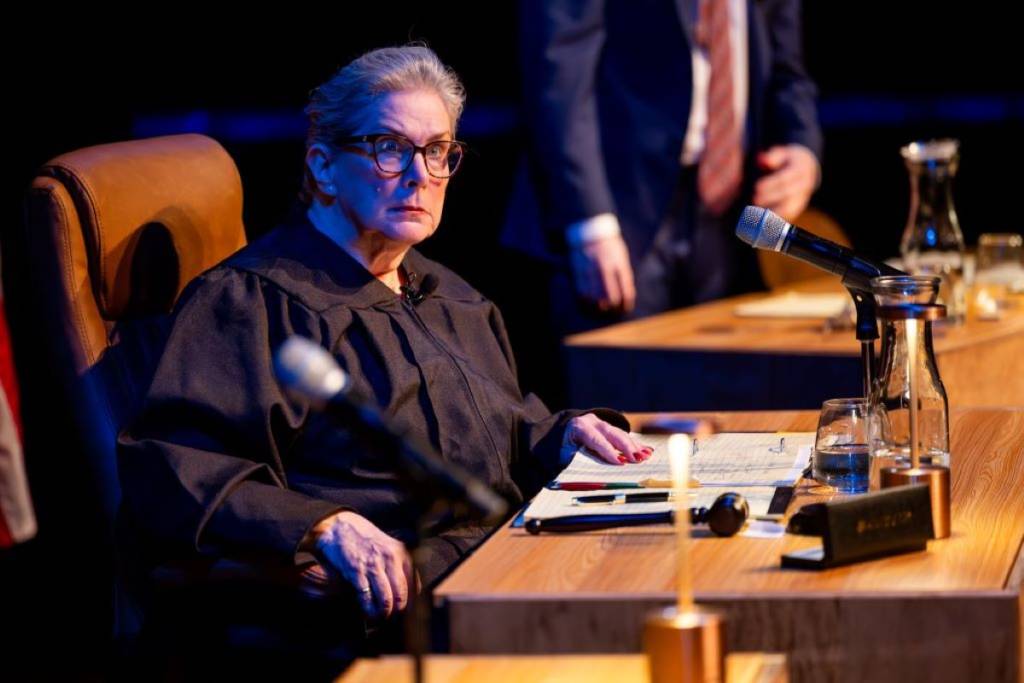
The Jury Experience has launched in Glasgow, offering a live courtroom drama format in which audience members take on the role of jurors and decide the final verdict.
The production blends theatre, legal storytelling and audience participation, positioning visitors inside a fictional trial where witness testimony, evidence and character motives must be assessed before a decision is reached. For producers, venue operators and experience designers, the format reflects growing demand for participatory entertainment that gives audiences a defined role rather than a passive seat.
The Glasgow edition builds on the city’s strong cultural association with crime drama, legal narratives and high-stakes storytelling. Its premise is designed to use that familiarity while presenting the trial as a live, structured decision-making experience.
Death On The Port Side Sets The Case
The featured case, Death On The Port Side, centres on a fatal late-night speedboat crash. One person is dead, another is in a coma, and the accused is presented within a story shaped by social status, political connections and conflicting accounts.
As the trial unfolds, the audience must weigh competing interpretations of the incident. The production introduces fractured memories, shifting testimony and personal relationships that complicate questions of intent, accident and responsibility.
For immersive theatre specialists, this case structure is commercially useful because it gives the audience clear stakes while leaving enough ambiguity to support debate. A courtroom setting naturally gives participants permission to analyse, question and form judgements, making it a strong framework for repeatable interactive performance.
Participation Drives The Experience Model
Unlike conventional theatre, The Jury Experience gives the audience a formal task. Attendees are not simply watching a legal drama unfold. They are asked to interpret the evidence, assess the credibility of testimony and contribute to the final outcome.





Professional actors deliver the courtroom scenes, while multimedia elements support the presentation of evidence and case detail. This combination helps clarify complex information while maintaining theatrical pace.
For B2B audiences, the model shows how structured participation can increase engagement without requiring open-ended improvisation. The audience role is clearly defined, the story is controlled, and the outcome is shaped through collective decision-making. This makes the format more scalable than many immersive productions that depend heavily on individual audience interaction.
Operational Advantages For Venues
Courtroom drama offers several practical advantages for location-based entertainment and live experience venues. It can be staged with a contained set, a seated audience and a clear session structure. These features can support efficient ticketing, predictable running times and straightforward audience flow.
The format also suits a wide range of venues, including theatres, event spaces, hotels, civic buildings and adapted cultural settings. The content is driven by performance, writing and evidence presentation rather than large scenic environments, which can reduce physical build requirements.
For operators, the experience can also support group bookings, corporate events and adult evening programming. The decision-making element creates natural post-show discussion, increasing the social value of the visit.
Relevance For Immersive Experience Producers
The Jury Experience highlights the continued broadening of immersive entertainment. While many immersive projects rely on fantasy, horror or large-scale digital environments, this production uses realism, moral uncertainty and civic decision-making as its core appeal. For producers and commissioners, the Glasgow launch demonstrates the strength of formats that combine familiar genre conventions with direct audience agency. Crime and legal


