
The Israel Museum, the country’s largest cultural institution, is returning the priceless Dead Sea Scrolls, amongst other treasured artworks and artefacts, to its galleries. The collection had been secured in a heavily fortified vault but have since been removed ahead of the museum reopening after a five-month shutdown.
The museum closed its doors in March, as the country entered lockdown to prevent the further spread of COVID-19. Financial problems meant that the museum was kept closed as Israel began to ease lockdown restrictions on public spaces. The museum struggled to raise funding to allow it to “sustainably open for the duration of the crisis” director Ido Bruno said.
The majority of the museum’s 500 employees have returned to work ahead of the grand reopening, following a four-month period on furlough. In preparation for reopening, curators and cleaners dusted off artefacts, removed protective coverings and returned masterpieces to their exhibits.
The Dead Sea Scrolls are fragile, two millennia-old parchments that include the oldest existing copies of biblical texts and have been removed from a ‘deep sleep’ within the museum’s climate-controlled vaults. The delicate scrolls require low light and humidity to ensure their long-term preservation.
Shrine of the Book curator Hagit Maoz said “Each scroll sits in the showcase only for three months, then we rotate the parts. Because we didn’t know how long we won’t be here … to be on the safe side we decided to take everything down (to the vault).”




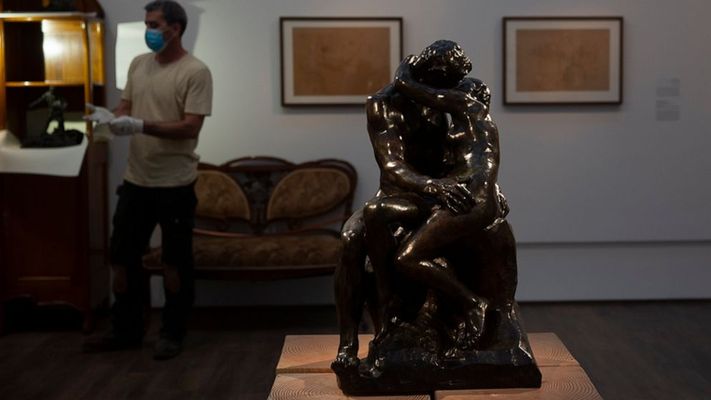
The museum’s modern art wing has seen the re-introduction of several statues by the celebrated French sculptor Auguste Rodin, including the iconic “The Kiss.” Senior curator Adina Kamien oversaw the installation. “I feel that the museum is returning to life,” she said. “A museum that can’t welcome its patrons is a dead museum. An artwork and exhibit are not complete without visitors.”
Israel closed its borders at the start of lockdown, and the international tourism on which the museum relies for ticket sales plummeted from a record high of over 900,000 visitors in 2019 to zero by mid-March. The museum received funds from American donors to help it reopen.
Entry to the museum is currently restricted to 2,000 people at any one time, and tickets must be purchased online prior to attending. “It’s very, very difficult to be a director of a closed museum, because museums want to be open,” Bruno said. “They want to welcome people. They want to open up.”


