
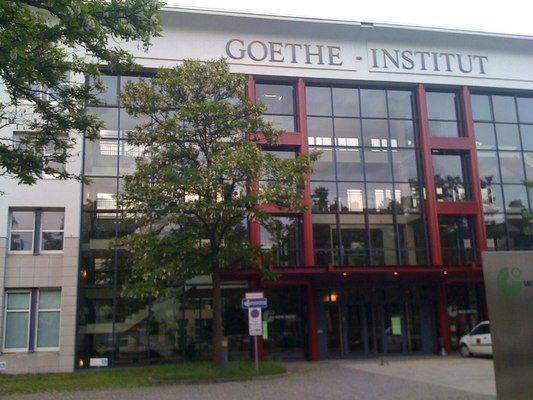
The Cultural Value Project is a joint research project commissioned by the British Council in the UK and the Goethe-Institut in Germany. The project started back in January, 2017 and continued till May, 2019.
The foundation of the Cultural Value project lay in the UK government’s Culture White Paper released in 2016 setting the Government’s priority and agenda around culture and soft power.
According to the paper:
“Culture continues to expand the UK’s influence, promotes trade and investment and attracts visitors to experience the beauty of our landscapes. This respect and influence gives us status in global networks and international organisations. In turn, those networks give us the opportunity to promote our cultural and creative talent.”
Arts practice is by its very nature interdisciplinary and highly collaborative. Since 2016, the UK has made cultural partnerships and collaborations the focus of its soft power agenda. Connections built through artistic and cultural exchanges are crucial to establishing trust and build credibility through collaboration.
The British Council’s ‘International Seasons’ for example also aims to help create a modern, vibrant and creative image of the UK, encouraging tourism and greater investment in the country.
The Cultural Value Project on the other hand aimed to create a better understanding of the value of cultural relations in societies facing difficult challenges, particularly in Egypt and Ukraine.
The project sought to build on the strengths of two separate approaches – the Open University’s Cultural Value Model (CVM) and the Hertie School of governance’s Civil Society Diamond (CSD).
The relative strengths of different kinds of cultural relations activities and the value they create in diverse contexts were analysed via a series of strategically selected case studies.




Putting together these two frameworks enriched the Cultural Value Project with a rich and contextualised picture of the value of cultural relations in different contexts and for different stakeholders.
This joint methodological design paved the way for an analysis of the processes, practices and outcomes on the cultural relations in Egypt and Ukraine.
2018 research by the Institute for International Cultural Relations at the University of Edinburgh, commissioned by the British Council, was based on a statistical regression that aimed to identify the variables that are independently related to soft power impacts. These were measured by international student numbers, Foreign Direct investment (FDI) and tourism figures.
The findings indicated that the level of international cultural relations work carried out by organisations including the British Council was directly linked to increased FDI and foreign student figures. Findings also showed that a high culture ranking is directly linked to ‘hard power’ outcomes such as Gross Domestic Product (GDP).
According to the findings of the report, cultural institutions such as the British Council and the Goethe Institut were found to be influential in attracting international students, tourists and FDI. The more countries that become host to a cultural institute, the better the return for its parent state.
Finally, the report also found that a country’s cultural ranking in the world also matters when it comes to attracting FDI and that the cultural ranking also affects the country’s political influence in the world.
In fact, having a high culture was found to be more important than the hard power of a state as measured by GDP.


