
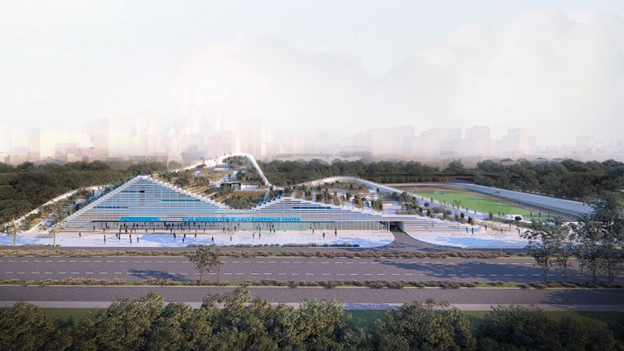
In a bold fusion of natural forms and architectural innovation, Stefano Boeri Architetti has unveiled its design for the new Museum of Technology in Xi’an, China. Promising to be a cornerstone of cultural and scientific engagement, the project aims to embody a synergy between the environment and technology, reflecting the rich historical tapestry of Shaanxi Province.
The design of the museum is striking, with its undulating structure topped with terraces, set to become a new landmark in the ancient city of Xi’an. The building’s form mimics the flow of rivers and the majestic outlines of mountains, a nod to the natural landscape that surrounds this historic area. On one side, the structure is lined with vertical metal slats, while the other features horizontal slats of glass fibre-reinforced concrete, creating a visual dialogue between solidity and transparency.
Stefano Boeri, the founder of the eponymous studio, described the museum not just as a building but as an “architecture open to everybody.” It is envisioned as a dynamic space that will catalyse urban regeneration in the area and draw a diverse audience, from tech aficionados to students and tourists. This facility is designed to be more than a museum; it is an inclusive space for study, research, and technological innovation located in the heart of one of the most significant historical cities in China.
The Museum of Technology is strategically developed as part of a sequence of public spaces that enhance connectivity between the urban park to the north and a bustling city street to the south. The project’s layout promotes a permeable system that is open to the public and capable of forging new urban links at various levels, thus redefining the museum’s role in the urban fabric.
One of the standout features of the museum will be its series of accessible green rooftop terraces. These terraces are designed to serve dual functions—they offer panoramic views of the city and serve as vibrant social spaces where visitors can gather. Planned events range from screenings to live performances, enhancing the museum’s role as a cultural hub. The terraces will also host a variety of plant species typical of Chinese landscapes, reinforcing the museum’s commitment to integrating nature within its design.




Inside, the museum is to house four primary spaces to host exhibitions, a temporary exhibition area, and commercial zones, all interconnected by a double-height central atrium. These spaces are planned to feature an array of digital artworks and interactive exhibits, with virtual signage and apps to enhance visitor navigation and engagement. Yibo Xu, a studio partner, emphasised the integration of multimedia and digital content, aiming to redefine how art is produced and exhibited in the technological age.
In addition to its aesthetic and functional attributes, the museum is expected to be pivotal in paving the way for future exhibition scenarios and exploring new methods of presenting technology and art. This approach aligns with Stefano Boeri Architetti’s broader vision, which is evident in their other innovative projects, including a meditation centre at a key Buddhist site and a comprehensive master plan for a Smart Forest City in Mexico.
Set to open its doors in the coming years, the Museum of Technology in Xi’an represents a significant leap forward in the design of cultural institutions. It embodies a future where architecture not only respects the past and the natural environment but also embraces the challenges and opportunities of the digital age, making it a beacon of innovation and education in Xi’an.


