
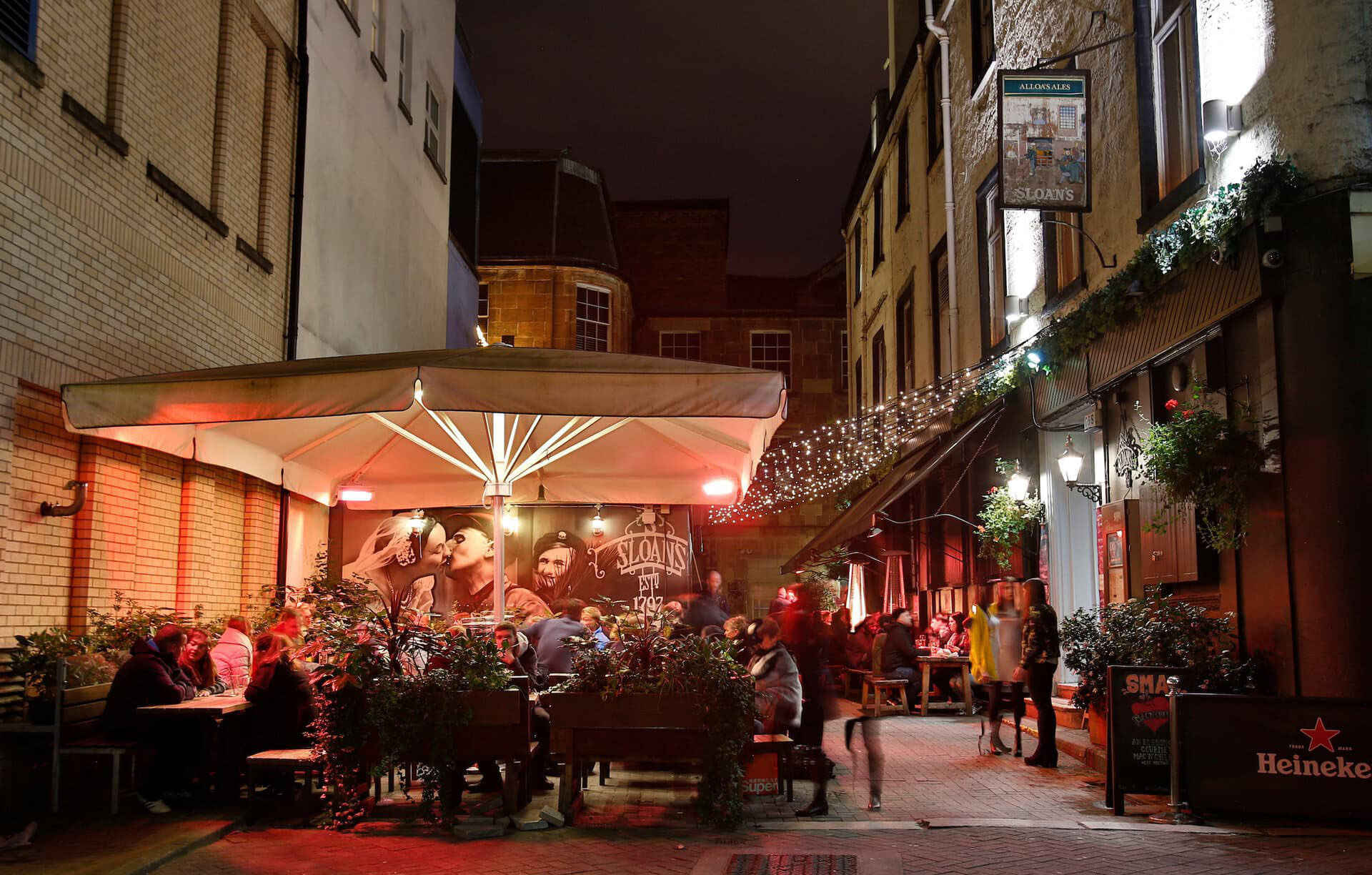
Sloans, widely recognised as Glasgow’s oldest bar and restaurant, is preparing to launch a new immersive dining concept following a £500,000 investment in the historic city centre venue.
The Merchant’s at Sloans will occupy the first floor of the 200-year-old building and operate as a standalone experience. Full details are due later this month, but the concept will combine dining with immersive storytelling, drawing on the people, events and social history connected to the venue and the wider city.
For operators working across hospitality, live experience, heritage venues and themed environments, the project reflects the growing commercial use of narrative-led dining within historic assets. Rather than relying solely on food and beverage, Sloans is using its long history as a platform for a more distinctive visitor experience.
Storytelling Adds Value To Hospitality Assets
Sloans has operated in Glasgow since 1797 and has played many roles over its long life. Its cobbled lane has been associated with stage coaches and early public entertainment, while the venue is now known for events including ceilidhs, weddings and special-interest dining concepts.
Owner Oli Norman, also behind brel and Maggie’s Rock ‘n’ Rodeo, is positioning The Merchant’s as a way to celebrate the venue’s identity while creating a new reason for audiences to engage with the site. The investment suggests a strategic move to make the first floor more productive, commercially distinct and capable of supporting a premium experience model.
For the B2B visitor experience sector, the project is notable because it uses an existing heritage venue as the primary creative asset. The building’s age, former uses, local reputation and archive of stories all provide material for experience design. This can reduce dependence on imported IP while allowing the operator to build a place-specific concept.
Investment Builds On Seasonal Success
The Merchant’s follows a £300,000 investment last winter, when Sloans updated its lane, bar and ballroom as part of a festive programme. That work helped position the venue as a seasonal destination in Glasgow city centre, using atmosphere, events and hospitality to support increased footfall during a key trading period.




The new £500,000 project takes that investment strategy further by developing a year-round concept on the first floor. For heritage hospitality operators, this staged approach is commercially relevant. Seasonal upgrades can test audience appetite and improve brand visibility, while later investment can create a more permanent revenue-generating product.
Immersive dining also lets venues connect food, performance, sound, lighting, scenic design, and service into a single offer. When delivered well, it can support higher spend per head, group bookings and stronger differentiation in competitive city-centre markets.
A Model For Place-Based Experience Development
The Merchant’s at Sloans underlines how hospitality operators are increasingly thinking like experience producers. Historic venues hold stories that can be structured into marketable concepts, provided they are supported by careful design, operational planning and credible interpretation.
For Glasgow, the project adds another experience-led product to the city’s hospitality and leisure mix. For the wider sector, it demonstrates how long-established venues can use capital investment to protect relevance, increase asset use and move beyond traditional dining formats.
As more information is released, the key test will be how The Merchant’s balances commercial entertainment with the authenticity of Sloans’ 200-year history. Its success will likely depend on turning local heritage into a well-managed, repeatable dining experience that feels rooted in the building rather than simply added to it.


