
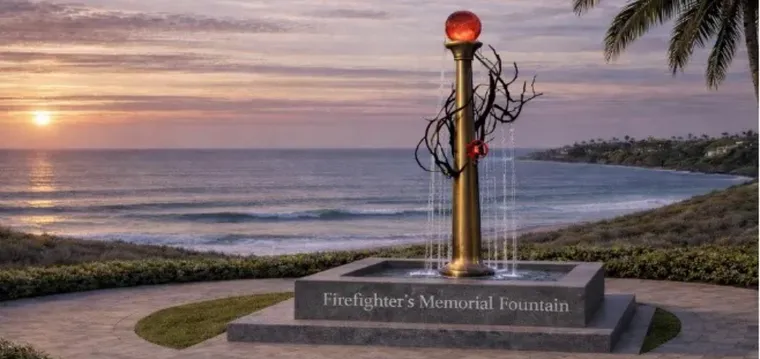
Santa Barbara’s Public Arts Initiative will launch its first exhibition focused on future public art proposals for the region, offering an early-stage platform for artists, cultural leaders and civic stakeholders to test ideas before formal commissioning.
Titled Artists Reimagine Public Art In Santa Barbara, the exhibition opens on Thursday 3 September at Voice Gallery in La Cumbre Plaza. It will run from 1 to 29 September alongside the Abstract Art Collective Fall Member Show.
The initiative is a project of the Santa Barbara Sculptors Guild and has been supported by Santa Barbara Beautiful. The exhibition presents scaled mockups of proposed artworks, giving audiences and decision-makers a chance to review concepts before funding, site selection or final delivery decisions are in place.
For public art commissioners, cultural planners and urban development teams, the model is notable because it places consultation at the beginning of the creative process. This contrasts with the more common approach, where communities first encounter proposals after many core decisions have already been made.
Artists Present Early-Stage Civic Concepts
The exhibition brings together work from Misa Art, Shelby Scudder, Patrick McGinnis, Erica Huff, Ariana Rose, Kathryn Lape, Rich Kaplan, Skip Lau, Eric Saint Georges, Lisa Trevell and JJ Reuben Lee.
Each participating artist has developed a proposal for a possible future public artwork in Santa Barbara. The use of scaled models gives the exhibition practical value for stakeholders who need to assess form, presence, material direction and possible civic impact before considering wider project development.
For experienced designers and public art professionals, early visualisation is a useful tool. It helps bridge the gap between artistic intent, site context and stakeholder understanding. Mockups can also support conversations around maintenance, accessibility, fabrication, installation, safety and audience interaction, all of which are important in permanent or semi-permanent public settings.
The exhibition’s format also gives artists direct access to community feedback, helping them understand which concepts connect most strongly with local identity and civic priorities.
Community Feedback As Project Intelligence




Visitors will be able to review the proposals, speak with the artists, submit comments and vote for the concept they find most compelling. For arts organisations and local authorities, this type of feedback can provide useful insight into community sentiment before capital funding is pursued.
The exhibition does not currently attach implementation funding to any of the proposals. Instead, it is designed to build visibility, test public interest and encourage future backing from potential partners, patrons or civic bodies.
For B2B audiences, this is an important distinction. The project is not simply a gallery exhibition. It functions as a research and engagement mechanism for possible future placemaking activity. By documenting responses, organisers can gather evidence of support that may help shape funding bids, partnership discussions and future public art strategies.
Value For Civic Culture And Place Development
Public art can play an important role in shaping how people experience streets, plazas, parks and shared civic spaces. For cities and districts, successful public art programmes require alignment between artistic quality, community relevance, site conditions and long-term stewardship.
Santa Barbara’s Public Arts Initiative offers a low-risk structure for testing that alignment. By presenting ideas before procurement or construction, the exhibition gives cultural stakeholders a clearer view of what local audiences value.
The collaboration with the Abstract Art Collective also shows how shared cultural infrastructure can support new initiatives. Hosting the display within an existing gallery programme allows the Public Arts Initiative to reach an engaged audience while giving the proposals a professional presentation context.
As cities continue to invest in cultural identity and civic space, Santa Barbara’s approach provides a useful example of early engagement in public art planning. The exhibition may help move selected concepts towards future support, while also giving the region a stronger process for community-informed creative development.


