
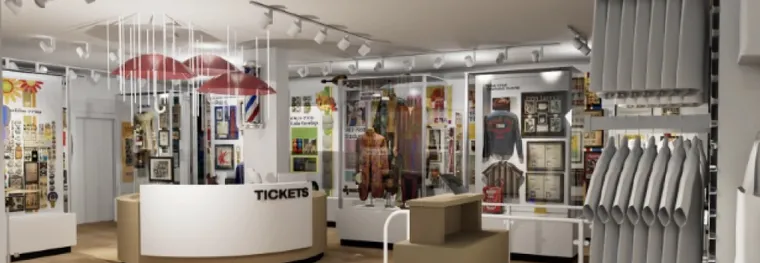
Penny Lane Beatles Museum has opened its expanded new home in downtown St. Petersburg, creating a larger platform for one of Florida’s distinctive music heritage collections.
The nonprofit museum welcomed visitors to its new location on 5 August 2026, inside the historic Palais Royale building at 146 2nd Street North. The move takes Penny Lane from its former upstairs gallery in Dunedin into a street-level site close to several established cultural institutions, including The James Museum of Western & Wildlife Art, the Museum of the American Arts & Crafts Movement, the Florida Holocaust Museum and the Museum of Fine Arts.
For cultural operators and destination planners, the relocation is significant because it places a specialist pop-culture attraction within an active museum district. The new setting offers stronger visibility, improved visitor access and greater potential for partnerships across tourism, education, live music and the wider arts sector.
Larger Footprint Supports Collection Rotation
Penny Lane previously operated from a compact second-floor space in Dunedin, where limited capacity meant many items remained in storage. The new St. Petersburg venue covers around 2,100 sq ft, nearly four times the size of the earlier museum.
This expanded footprint allows close to 1,000 objects to be shown at one time from a collection of over 1,600 Beatles-related artefacts. The museum also plans to rotate displays, supporting repeat visitation and giving curators greater flexibility in how the collection is presented.
The collection was developed by founder Dr Robert Entel, a Clearwater-area radiologist whose interest in The Beatles grew from early collecting into a substantial archive of music, cultural and commercial material. The museum, founded in 2017, operates as a 501(c)(3) nonprofit with a remit to preserve and share Beatles-related history.
Items include musical instruments, signed records, photographs, documents, vintage merchandise, toys, games, clothing, promotional pieces, gold-record awards and stage-related material. Notable features include a pair of glasses once owned by John Lennon, a Beatles-themed pinball machine, a Yellow Submarine jukebox and a drum kit played by Ringo Starr in a television commercial.
Professional Presentation Adds Visitor Value




The new museum has been planned as a curated visitor experience rather than a simple memorabilia display. Professional curator Allison Holuban has led the exhibition approach, while Creative Arts Unlimited of Pinellas Park has developed displays and presentation areas. The company’s previous work includes attraction projects such as the Tampa Bay History Center.
The museum is expected to use chronological and thematic interpretation, supported by QR codes that provide additional context for selected artefacts. For museum designers and operators, this points to a practical model for presenting private collections in a way that supports public learning, commercial sustainability and long-term audience interest.
The facility also includes a children’s activity area, foyer performance potential and plans for education programmes, talks, special events and regional cultural collaborations. Possible partners identified by museum leadership include The Florida Orchestra, the University of South Florida’s music department and Creative Pinellas.
Addition To St. Petersburg’s Cultural Economy
The move strengthens downtown St. Petersburg’s position as a cultural destination and adds music heritage to an already varied museum offer. The former Dunedin site reportedly attracted around 9,000 to 10,000 annual visitors despite its limited size and lower visibility, suggesting the new location could support stronger reach.
For the visitor experience sector, Penny Lane Beatles Museum demonstrates how specialist collections can gain fresh operational value through relocation, curatorial investment and integration into a wider cultural district. Its next phase will be watched as a case study in nonprofit pop-culture presentation, music heritage interpretation and destination-led museum growth.


