
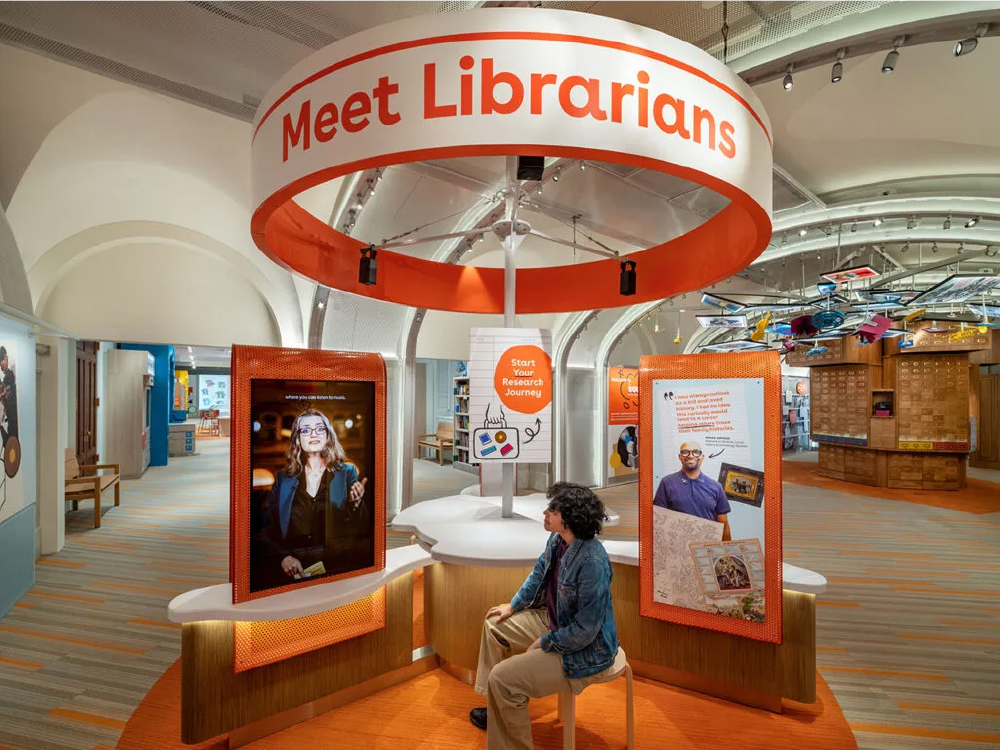
The Library of Congress has opened The Source, a 370 sq m experiential research gallery designed to help young visitors engage with primary sources through interactive AV technology.
Created as part of the A Library for You initiative, the gallery introduces visitors aged eight to 15 to the Library’s collections across film, text, sound and image. The project is notable for the way it uses projection mapping, RFID-enabled objects and digital workstations to guide independent exploration, rather than presenting archive material through conventional display cases alone.
For museums, libraries and cultural institutions, The Source offers a relevant model for making complex collections accessible to younger audiences while maintaining a clear focus on research skills. The gallery is built around active investigation, encouraging visitors to examine evidence, compare formats and understand how meaning is built from original material.
Physical And Digital Systems Work Together
Skolnick Architecture led interpretive planning and exhibition design for the project, appointing Potion, now Hyperquake, to develop the digital interactive installations. Media development was initially led by Potion founder Philip R. Tiongson and producer Claire Bradley, whose team now forms part of Hyperquake’s experiences group.
Working with Skolnick’s planners and Library of Congress content specialists, Hyperquake created a sequence of linked physical and digital activities. The result is a structured research pathway that introduces the methods used by researchers while still allowing young visitors to make choices and follow their own lines of interest.
The experience begins in the Welcome Room, where a five-sided Card Catalog acts as a projection-mapped AV feature. Opening drawers triggers animations that move across the structure, revealing material from the Library’s collections. Nearby, a Librarian Desk uses screen-based staff introductions to explain how primary sources are handled and studied, before directing visitors towards four themed Collections Zones.
RFID Objects Enable Responsive Interpretation
In the Collections Room, more than 200 RFID-enabled objects can be scanned at Investigation Stations. Once scanned, the objects unlock digital content that allows visitors to study manuscripts, magnify historic images, review audio recordings and move through film clips frame by frame.



This interaction model is important for experience designers because it connects tactile handling with digital depth. Visitors are not only looking at content on a screen, but using physical objects as access points into the archive. For institutions managing large collections, this type of design can create a bridge between object-led learning and scalable digital interpretation.
Replica Tools also feature in the gallery, including a film projector, record player and microfilm reader. These give visitors direct encounters with older media formats, helping them understand how information has been stored, accessed and studied across time.
Further along the route, the Researcher Desk presents archival boxes and screen narratives showing how real researchers, including young people, have used Library materials to explore specific questions. This places the technology within a wider learning purpose, showing research as a process that can begin with curiosity.
A Scalable Approach For Cultural Learning Spaces
The gallery concludes at the Source Book, a large interactive installation where visitors create digital collages and record their own research intentions. These contributions are added to a changing projection wall, creating a shared display of questions, reflections and ideas.
Hyperquake’s creative leadership has described The Source as an active research centre rather than a standard exhibition. For the visitor experience sector, that distinction matters. The project shows how AV, responsive media and object-based interaction can support institutional learning goals while delivering a participatory cultural experience.
For libraries, museums and educational attractions, The Source provides a strong example of research-led design, where technology is used to build confidence, improve access and connect younger audiences with original collection material.


