
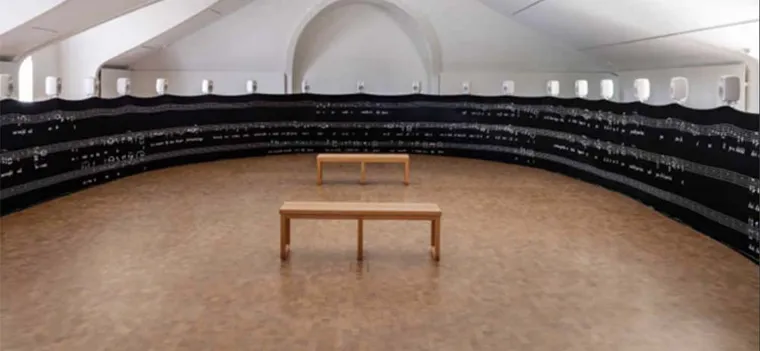
Genelec is partnering with Björk on Echolalia, a large-scale immersive exhibition at the National Gallery of Iceland, presented as part of the 2026 Reykjavík Arts Festival.
Running from late May to September 2026, the exhibition explores Björk’s multidisciplinary practice across collaboration, ritual, ecology, performance, visual art and sound. Rather than following a conventional retrospective format, Echolalia is structured as a spatial and sensory environment where audio plays a central curatorial role.
Sound As The Core Exhibition Medium
Echolalia is built around three major installations connected to Björk’s works Ancestress, Sorrowful Soil and the newly introduced Nerve Bloom.
Ancestress is set within a remote Icelandic valley and reflects on life cycles through music, movement and ritual. Sorrowful Soil is a nine-part choral composition, arranged so melodies pass between three groups of singers. Nerve Bloom, presented at the exhibition opening, gives audiences early access to material from Björk’s forthcoming album.
For museums, galleries and experience designers, the exhibition demonstrates how sound can be treated as a primary interpretive medium rather than a secondary layer. Audio is not simply supporting the work. It defines the spatial structure, atmosphere and emotional rhythm of the installation.
Multichannel Audio For Spatial Storytelling
Genelec’s role centres on the exhibition’s multichannel audio system, which has been designed to match Björk’s artistic direction.
Each of the 30 speakers transmits a voice from the Hamrahlíð choir, under the direction of Þorgerður Ingólfsdóttir. This arrangement allows individual vocal lines to occupy distinct positions within the gallery, giving the choral work a physical presence within the room.
For technical suppliers and cultural venues, this highlights the growing importance of precision audio in exhibition design. Multichannel systems can support more detailed spatial storytelling, giving curators and artists greater control over how audiences move, listen and respond.




The approach is particularly relevant for galleries working with performance, music and digital media. As cultural programming becomes more interdisciplinary, audio infrastructure is becoming an increasingly important part of exhibition planning.
Implications For Cultural Experience Design
Echolalia reflects a wider shift in gallery practice, where artists and institutions are creating environments that combine sound, image, space and sensory cues into a single visitor format.
For operators, the project offers a useful example of how a music-led exhibition can move beyond archive presentation or screen-based documentation. By placing visitors within a carefully planned sound field, the gallery becomes an active part of the work.
The partnership also shows how specialist technology providers can contribute to artistic integrity. In projects where sound quality, positioning and clarity are central to the concept, early collaboration between artists, curators and audio specialists can be critical.
For the wider visitor experience sector, Echolalia points to continuing demand for exhibition formats that are emotionally engaging, technically refined and suitable for international cultural audiences. The project also reinforces Iceland’s position as a strong setting for projects that connect art, place, sound and environmental themes.
Through its collaboration with Björk and the National Gallery of Iceland, Genelec is supporting a production that places listening at the centre of contemporary exhibition design.


