
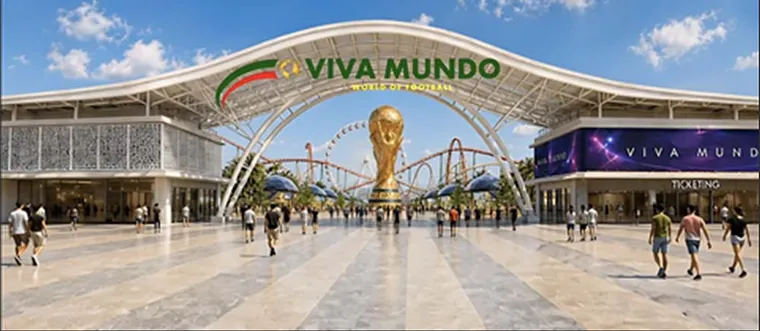
Plans have been presented for a €450m football theme park in Santarém, Portugal, as the country prepares to co-host the 2030 FIFA World Cup with Spain and Morocco.
The proposed destination is being developed by Zul Virani, with JFA Group leading engineering, procurement and construction. The project team has set a target completion date of 29 April 2030, placing the scheme on a tight timeline ahead of one of the world’s largest sporting events.
Located around 40 minutes from Lisbon, the destination is intended to combine football, entertainment, culture, education, tourism, hospitality and wider urban development. For attraction developers, sports venue operators and destination planners, the proposal reflects the growing role of football as a basis for year-round leisure development beyond the matchday stadium model.
Rather than being centred on one club, the concept appears to be designed around football culture as a global subject. This approach could allow the project to appeal across club loyalties, national markets and visitor groups, while giving operators more flexibility in programming, partnerships and licensing.
Attraction Mix And Live Entertainment
The planned destination is expected to include 28 attractions. Early concepts include a cinema experience, rollercoasters, a log flume and a large spherical media venue inspired by entertainment formats associated with Las Vegas.
The development is also set to feature a fan zone designed to recreate the atmosphere of a stadium environment, supported by a 4,000-seat arena for concerts and live performances. A 300-room hotel is planned next to the attraction, indicating a strategy based on multi-day stays, event packaging and linked hospitality revenue.
For the themed attractions sector, the mix points to a broad destination model rather than a narrow sports museum or branded fan attraction. Ride systems, media formats, live events and hospitality are being brought together to create a setting that can operate across peak sporting periods and quieter calendar windows.
This is particularly relevant in the context of major events such as the 2030 World Cup. Long-term success will depend on the park’s ability to generate demand after tournament-related attention has passed. A diversified offer can support this by giving operators multiple revenue channels and programming options.
Delivery Structure And Project Timeline



A special purpose vehicle, Lunar Bubble, has been created to act as the project developer and investment vehicle. It is owned by JFA Group founder and CEO José Ferraz and UK-based property developer Zul Virani, with Nazmu Virani and Sahinaz Virani also involved in the scheme.
Feasibility studies have already been completed, and the project is now at the design stage. The masterplan has been approved by local authorities, with full design expected by January 2027. The construction licence is targeted for the end of February 2027, subject to standard approvals.
Construction and procurement could begin in February 2027, while specialist contractors, subcontractors and suppliers are expected to be engaged from September 2026. This early supply chain engagement will be important for a project involving ride technology, media infrastructure, hotel development, public realm works and large-scale venue systems.
JFA has identified long-term operations, phasing, sustainability, infrastructure and technical coordination as central to delivery. For suppliers in the attractions sector, the project could create opportunities across design, engineering, fabrication, audiovisual systems, ride manufacture, wayfinding, food and beverage design, and guest operations.
A Test Case For Football-Led Leisure Development
The Santarém proposal highlights how major sporting events can act as catalysts for destination development. By linking football culture with attractions, entertainment and hospitality, the project aims to create an asset with relevance beyond tournament dates.
For the wider visitor experience industry, the scheme will be one to watch as it moves through design, licensing and procurement. Its progress may help define how football can be used as the organising idea for a large-scale themed destination in a competitive European leisure market.


