
Concert tie-ins are becoming a more sophisticated part of experiential marketing, as music fandom continues to shape how audiences gather, share content and build identity around artists.
Across major tours and festivals, fans are no longer attending only as spectators. They often arrive in coordinated clothing, bring handmade items, learn chants and create social media content before, during and after the event. For brands, this behaviour creates a highly engaged audience with clear cultural signals, shared rituals and strong appetite for limited-run products or social experiences.
Rather than buying visibility around music events alone, brands are increasingly designing activations that sit inside the fan journey. These projects can appear at venues, partner cafés, nearby bars, festival sites, cultural centres and specialist locations. The strongest examples connect to the artist’s visual identity, audience language or album campaign, making the brand activity feel linked to the wider moment.
For agencies, sponsors, venue teams and live event producers, concert tie-ins now offer a useful model for combining product sampling, merchandise, content capture, hospitality and fan community engagement.
Food And Beverage Brands Enter The Fan Journey
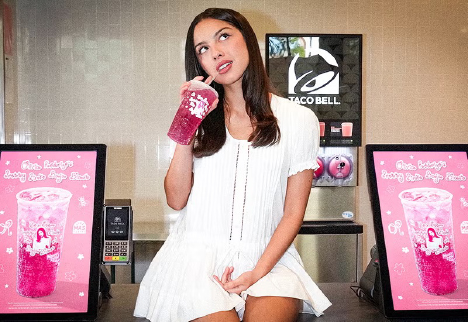
Taco Bell’s collaboration with Olivia Rodrigo shows how food and beverage brands can use artist partnerships to create urgency before a wider product release. The brand introduced a pink version of its Baja Blast drink, titled You Seem Pretty Pink For A Baja Blast, with early access at selected Live Más Cafés in California, Las Vegas and Texas.
The launch was timed ahead of nationwide availability and linked to Rodrigo’s Daisy Chain Fields Music Festival. At the festival, Taco Bell created a pink branded footprint, with ambassadors serving samples and distributing limited-edition merchandise including towels, can coolers and cup-shaped car ornaments. A photo booth and large cup installation added shareable content opportunities.
The approach points to several lessons for B2B audiences. Scarcity can drive demand, but physical design and merchandise are key to extending the value of the activation. The partnership also shows how branded food and drink can become part of the fan experience when it reflects the tone and visual cues of the artist campaign.



Aperol’s work with Hilary Duff took a hospitality-led route. As an official sponsor of the lucky me tour, Aperol hosted Spritz Day Clubs at selected US stops, directing adult fans to local bars and restaurants before performances. This format connected the concert calendar with off-site venues, giving hospitality partners a role in the campaign while extending activity beyond the arena.
Beauty, Retail And Cultural Venues Join The Mix
TIRTIR used BTS’s New York dates to connect with ARMY audiences through the Concert-Proof Bar, hosted at the Korean Cultural Center New York as part of ARMY MADANG. The K-beauty brand offered early access to BTS The City New York Perfect Setting Duo products, alongside samples, scratch-offs, hand fans, and event-specific giveaways.
For retail and beauty brands, this format shows the value of meeting fandoms in trusted cultural settings. It also highlights how limited product access and practical event-use items can support both engagement and conversion.
Spotify’s presentation of Phoebe Bridgers’ Lost Weekend listening sessions in over 40 planetariums took a different approach. Dome visuals created by night-sky photographer Babak Tafreshi gave the album a spatial format, while an exclusive event at Liberty Science Center in New Jersey included a surprise appearance and acoustic performance.
Implications For Experience Designers
These examples show that concert tie-ins are moving beyond simple sponsorship. The most effective projects are planned as extensions of the live music ecosystem, with clear links between artist identity, fan behaviour, location and brand offer.
For companies working in brand experience, venue programming, themed design, live events, retail activation and hospitality, the opportunity lies in designing formats that feel purposeful, time-sensitive and easy to share. As fandoms become more organised and visible, concert-linked activations are likely to remain a valuable route for brands seeking cultural relevance and measurable audience engagement.


