
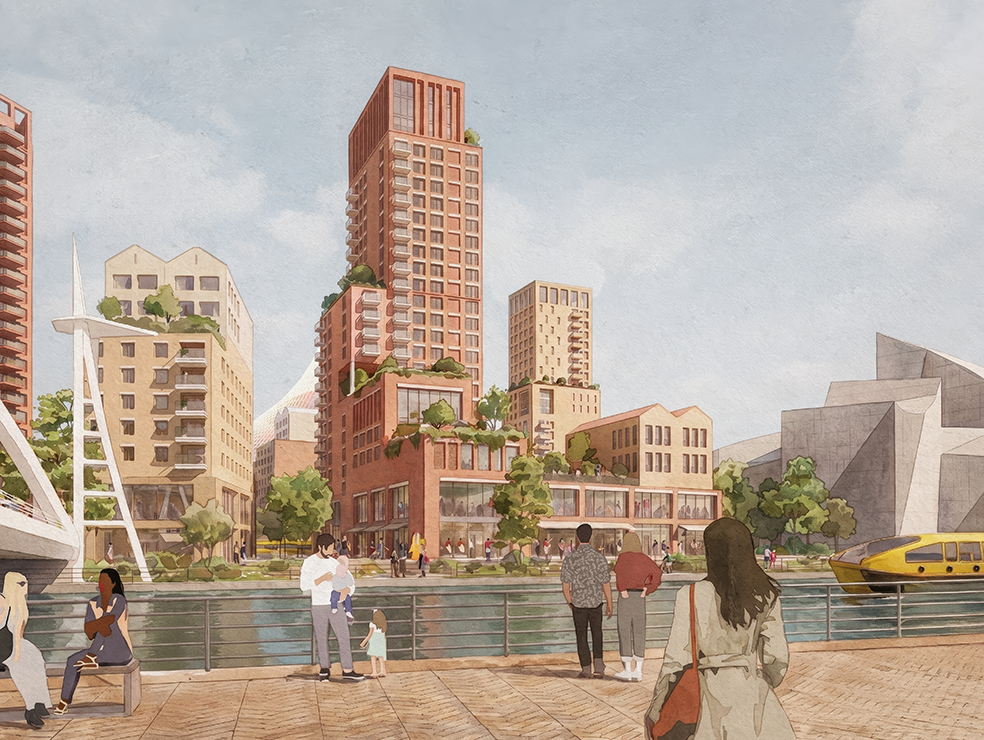
For generations, shopping centres were built around a simple promise: bring enough retailers together in one place and people will come.
That model shaped towns and cities across the UK. Department stores became anchors, retail units filled the space around them and shopping centres became places where communities met, socialised and spent time.
But the way we shop has changed and many of the places designed around that former model are struggling to find a new purpose.
A recent BBC article examining the future of medium-sized shopping centres highlighted the scale of the challenge. Analysis by CBRE found that vacancy rates across UK shopping centres reached 16% during the second quarter of 2026, while Savills reported that almost 73% of shopping-centre spending was concentrated in the largest destinations. Less than 18% was spent in secondary, medium-sized centres.
Some centres will be demolished. Others will be converted into housing, healthcare, laboratories or mixed-use developments. These can all be valid responses, depending on the needs of the place.
But there is another option: reimagining these spaces around experience.
The search for a new anchor
When a department store closes, the immediate question is often – what can replace it?
Perhaps we should ask a different question: what will give people a reason to come here?
The answer may no longer be a single retailer. It could be a cultural venue, an immersive attraction, a food hall, a theatre, a competitive socialising experience, a sports venue, a wellness destination, a learning space or a combination of several uses.
The anchor of the future may not be somewhere people go primarily to buy something. It may be somewhere they go to do something, discover something or share something.
That change is already happening. Former retail units are becoming entertainment venues, galleries, health facilities, flexible workspaces and community hubs. Market Walk in Northampton is being repositioned as a leisure and entertainment destination. Elsewhere in the town, Silhouette Youth Theatre plans to create a 250-seat theatre inside part of a former Wilko store at Weston Favell Shopping Centre.
These are not simply alternative uses for empty buildings. They represent a different understanding of what these places can become.
Extending the day
One of the greatest challenges facing traditional shopping destinations is that their activity is concentrated into an increasingly limited part of the day.
Retail may bring people in during conventional shopping hours, but experience-led uses can extend the life of a destination into the evening and across the week.
A family attraction creates one pattern of visitation. A theatre, restaurant or live entertainment venue creates another. Learning, health and community services bring different audiences at different times. Seasonal events, exhibitions and public programming encourage repeat visits rather than relying upon occasional retail transactions.
When these elements work together, a shopping centre can become much more than the sum of its units. It can become part of the social and cultural infrastructure of a place.
This is important because the strongest destinations offer multiple reasons to visit. People might arrive for an exhibition, stay for dinner, browse independent shops and return later for an event. Each experience creates footfall and value for the businesses around it.
The Experience Economy Index, developed by Grant Thornton in partnership with Experience UK launches next week and demonstrates the scale of this opportunity. Immersive attractions alone generate an estimated £7.4 billion in consumer spending and £3.9 billion in gross value added, with almost one-third of Britons having attended an immersive attraction during the past year.
This is no longer a niche part of the leisure market. Experience is becoming an increasingly important part of how people choose to spend their time and money.
Stadiums as placemaking anchors
Sports stadia demonstrate the power of an experience anchor on an even larger scale.
A stadium can attract tens of thousands of people, generate international visibility and create a powerful emotional connection with a place. However, traditional stadium districts can also be highly dependent on matchdays, extremely busy for a few hours and comparatively quiet for the rest of the week.
The greatest placemaking opportunity comes when the stadium is considered as the centrepiece of a much broader destination.
The plans for Old Trafford provide an ambitious example. Manchester United’s proposed new 100,000-seat stadium is intended to act as the catalyst for the wider regeneration of Trafford Wharfside rather than being developed as a standalone venue.
The emerging vision covers a 370-acre regeneration area and includes new homes, employment, public spaces, improved public transport, enhanced rail connections and walking and cycling infrastructure. It aims to create a district in which people can live, work, visit and spend time every day, not just on match days.
Sport provides the anchor, but the wider destination will depend upon entertainment, culture, food and drink, hospitality, heritage, public realm and community use.
Old Trafford also demonstrates the importance of building upon the identity that is already there. The history, traditions and matchday rituals associated with the existing stadium form part of the cultural fabric of the place. Successful regeneration must respect that heritage while creating new reasons for supporters, residents and visitors to engage with the area.
This principle extends beyond football. Cricket grounds, arenas, racecourses and other sporting venues can all become year-round destinations when they are connected to complementary experiences and the wider life of their communities.
The opportunity is not simply to build a better stadium. It is to use sport as the catalyst for a better place.
More than filling empty units
Simply placing an attraction inside a former shop does not automatically create a successful destination.
Experience-led regeneration requires a broader view of the visitor journey.



How do people arrive? Is the destination easy to navigate? What happens in the spaces between the individual venues? Is there a strong food and drink offer? Does the public realm feel welcoming? Are there reasons to stay into the evening? Does the experience connect with the surrounding high street and town centre?
The physical space matters, but so do programming, storytelling, identity and operations.
Culture has an especially important role. Museums, heritage, performance, public art and local storytelling help a destination feel rooted in its community. They can give new meaning to spaces that might otherwise become interchangeable collections of leisure brands.
Sport can play a similar cultural role. Clubs and venues are often deeply connected to the identity and history of their communities. Their stories, archives, supporters and traditions can contribute to an authentic sense of place that cannot simply be replicated elsewhere.
The most successful schemes will balance national and international operators with independent businesses, local culture and community activity. They will attract visitors without losing sight of the people who use the place every day.
This is the difference between filling vacant property and genuinely creating a place.
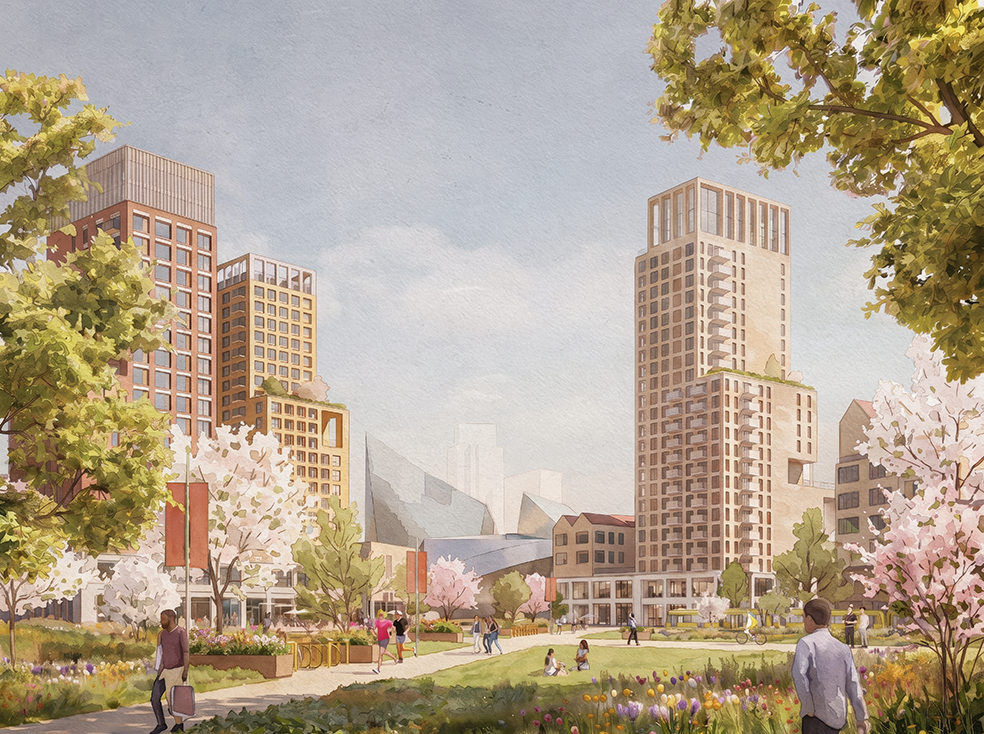
No single model
Not every struggling shopping centre should become an entertainment complex. Places have different audiences, assets and needs.
For some, housing and public services will be the priority. Others may become centres for education, health, enterprise, sport or culture. Many will require a carefully planned mixture of uses.
A suburban centre may succeed by becoming a convenient community hub, bringing together shops, healthcare, learning, leisure and local services. A city-centre scheme may need a stronger cultural and evening-economy offer. An out-of-town destination might build around larger-scale attractions, sport, food and hospitality.
The starting point should be understanding the place rather than selecting a fashionable concept.
What is missing locally? Who currently uses the destination and who does not? What stories, sporting traditions and cultural assets already exist? Which audiences could be attracted? How will the new anchor support surrounding businesses and communities?
The answer must be commercially viable, but it must also be relevant.
Bringing different sectors together
The traditional boundaries between retail, attractions, sport, culture, property and hospitality are disappearing.
Developers are thinking more carefully about experience. Retail destinations are introducing attractions and entertainment. Sports organisations are considering the wider districts around their venues. Cultural organisations are exploring new commercial models. Operators are moving into mixed-use developments, while local authorities are seeking new ways to reactivate town centres.
Yet these sectors do not always speak the same language or become involved at the same stage.
Operators and experience designers are sometimes invited into a development only after the major decisions have been made. Cultural and sporting organisations can be treated as occupiers rather than partners in the creation of a place. Communities may be consulted about a proposal rather than involved in shaping its purpose.
Experience needs to be considered much earlier.
Through Experience Talks, we have been bringing creators, operators, developers, investors, cultural leaders and place shapers into the same conversation. These discussions repeatedly demonstrate that successful destinations are created through collaboration—not by one sector acting alone.
Experience UK has an important role in helping to build those connections. Our membership brings together the people who imagine, create, finance, build and operate experiences, alongside those responsible for the places in which they happen.
A renewed purpose
The decline of the traditional shopping-centre model is undoubtedly a challenge, but it also creates an opportunity.
Many of these centres are accessible, familiar and already embedded within their communities. They have transport connections, substantial indoor space and a history of bringing people together.
Their future may not look like their past, but that does not mean they have no future.
If experience becomes the new anchor, these spaces can once again become places people actively choose to visit. They can support local businesses, create employment, strengthen culture and community life, extend the day and bring renewed energy to surrounding high streets.
The same principle applies to stadium districts and other large destinations: the anchor creates the initial reason to visit, but the wider place determines the lasting value.
The question is no longer whether every empty retail unit can be filled or whether a new venue can attract enough visitors on its own.
It is whether we can give the whole destination a reason to matter again.
That is a far more ambitious challenge, but equally a much more exciting opportunity.
Images courtesy of Allies and Morrison.


